
The classic Thanksgiving story is a cornerstone of American identity. But almost everything we know about the 1621 harvest celebration comes from a single letter. Let's separate what that letter actually says from what we've inferred ever since.
Claim: The Pilgrims invited the Wampanoag for a diplomatic feast.
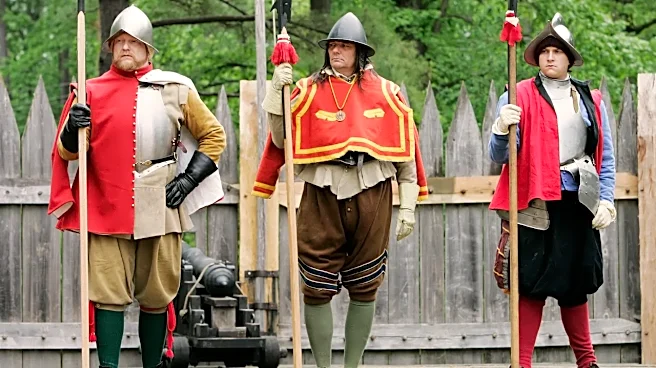
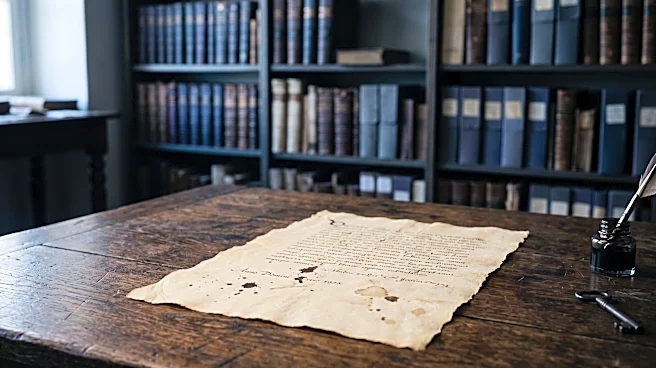
This is an inference. The only primary source, a letter from colonist Edward Winslow, never mentions an invitation. He writes that after the colonists' successful harvest, they began a week of celebration that included 'recreations' where they 'exercised our arms' (fired their guns). Then, he notes that Wampanoag leader Massasoit and 'some ninety men' came 'amongst us'. Many historians now infer that the Wampanoag, hearing the gunfire, may have arrived to see if their allies were under attack, not because
they received a formal invitation to dinner. The English then 'entertained and feasted' them for three days, but the idea of a planned, joint celebration is not explicitly stated in the text.
Claim: Turkey was the centerpiece of the meal.
This is a strong inference, but not a confirmed fact. Winslow's letter says the governor sent four men 'on fowling,' and that they killed enough 'fowl' to last the company almost a week. While wild turkey was available in the region, the term 'fowl' could have meant ducks, geese, swans, or other birds, which may have been easier to hunt. Another colonist, William Bradford, writing years later, did mention that the colonists had taken 'great store of wild turkeys' that autumn, but not specifically for that one meal. The only food explicitly contributed by the Wampanoag during the feast was 'five deer.' This means venison was a guaranteed main course, while turkey remains a very likely, but unproven, part of the menu.
Claim: They ate pumpkin pie, mashed potatoes, and cranberry sauce.
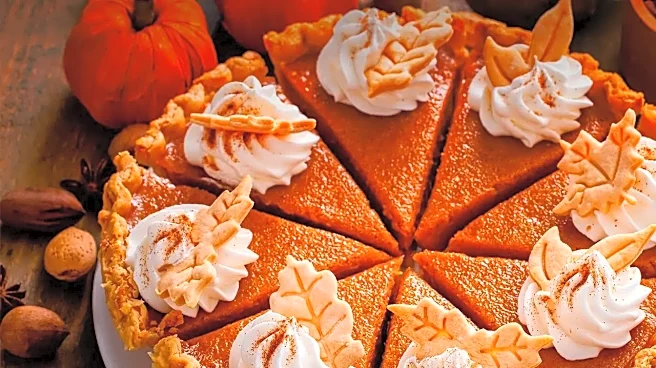
This is an incorrect inference. The classic Thanksgiving side dishes we love today would have been impossible for the colonists to make in 1621. While they likely had pumpkins and other squashes, they lacked butter, wheat flour, and ovens, making pie an impossibility. Potatoes, native to South America, had not yet been introduced to North America. And cranberries? While the berries grew wild, the colonists' sugar supplies, brought from England, were long gone, so they couldn't have made the sweetened sauce we now eat. The meal more likely consisted of roasted meats, seafood like lobster and mussels, and porridges or breads made from corn.
Claim: It was called the 'First Thanksgiving.'
This is a much later inference. The colonists never used the word 'Thanksgiving' to describe their 1621 harvest celebration. For the deeply religious Puritans, a day of 'thanksgiving' was a solemn affair dedicated to prayer and fasting, not feasting and recreation. Their 1621 gathering was a secular harvest festival, a tradition common in both English and Native cultures. The event was barely mentioned for centuries. It wasn't until the 1800s that editor Alexander Young, reprinting Winslow's letter, called it the 'first Thanksgiving' in a footnote, forever linking the 1621 harvest festival with the modern holiday.
Claim: The Pilgrims and Wampanoag were celebrating a new friendship.
This is a partial truth mixed with inference. The two groups did have a formal alliance, established the spring before the feast. This alliance was strategic: the colonists needed help surviving, and the Wampanoag, whose numbers had been decimated by European diseases, needed allies against rival tribes. Winslow's letter describes the relationship as 'very faithful in their covenant of peace.' So, the feast occurred during a period of peace. However, framing it simply as a happy celebration of friendship oversimplifies the complex and tense reality. It was a moment of mutual need, and sadly, the peace did not last. Within a generation, brutal conflict erupted between the English colonists and the Wampanoag.