


The First Presidential Proclamation
Long before Thanksgiving was a fixed holiday, presidents would declare one-off days of thanks. The first to do so under the new Constitution was George Washington. On October 3, 1789, he designated Thursday, November 26, as a day for Americans to thank God for their blessings, especially the peaceful establishment of their new government. In his proclamation, Washington called for gratitude for the conclusion of the Revolutionary War and the ability to create a constitution for their 'safety and happiness'. However, this did not establish an annual tradition. For the next 70 years, Thanksgiving declarations were inconsistent, with various states observing the day on different dates, if at all.
The 'Mother of Thanksgiving' and a Nation at War
The woman most responsible for the holiday we know
today was Sarah Josepha Hale, a popular 19th-century magazine editor and author of 'Mary Had a Little Lamb'. For decades, Hale tirelessly campaigned for a unified, national Thanksgiving Day, writing hundreds of letters to governors and five different presidents. She believed a shared day of gratitude could help heal a nation increasingly divided by sectional tensions. Her pleas were finally answered by President Abraham Lincoln in the midst of the Civil War. On October 3, 1863, just months after the bloody Battle of Gettysburg, Lincoln issued a proclamation setting aside the last Thursday of November as a national day of Thanksgiving. He hoped it would help 'heal the wounds of the nation' and remind Americans of their shared blessings even in a time of 'unequalled magnitude and severity'.
Inventing the Traditions
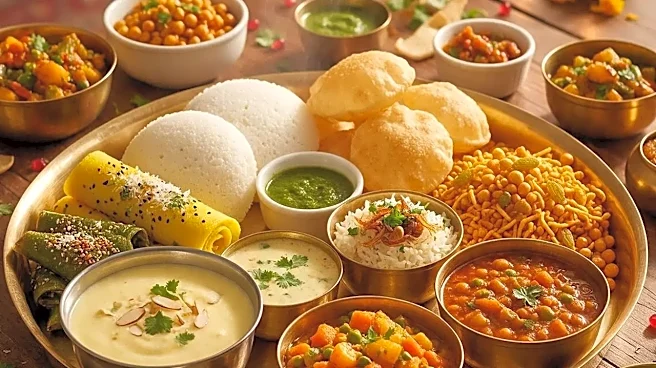
While Lincoln made the holiday official, it was Sarah Josepha Hale who largely invented what we consider the 'traditional' Thanksgiving. Her magazine, 'Godey's Lady's Book', was one of the most influential publications of its time. Through editorials, poems, and recipes, she promoted a specific vision of the holiday centered on family, roasted turkey, stuffing, and pumpkin pie. These weren't necessarily the foods of the 1621 gathering, but rather the staples of a 19th-century New England celebration. It wasn't until after 1865 that Hale began to explicitly connect her national holiday to the Pilgrim story, an idea that was then picked up by newspapers and school textbooks, cementing the 1621 feast in the popular imagination.
A National Day of Mourning
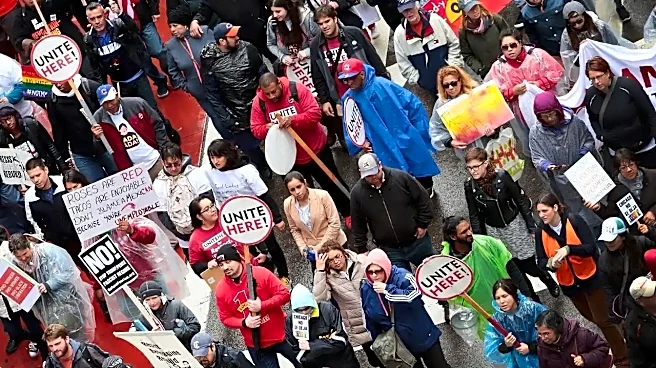
For many Native Americans, Thanksgiving is not a day of celebration but a painful reminder of colonization, genocide, and the theft of their lands. This perspective gained a national platform in 1970, on the 350th anniversary of the Pilgrims' arrival. An Aquinnah Wampanoag man named Wamsutta (Frank) James was invited to speak at a commemorative event but had his speech suppressed because it was deemed too 'inflammatory'. Instead, he delivered his powerful remarks on Cole's Hill in Plymouth, overlooking Plymouth Rock, declaring a National Day of Mourning. Held annually on the same day as Thanksgiving, the event honors Native ancestors and protests the racism and oppression Indigenous peoples continue to face.
Franksgiving and the Power of Commerce
The date of Thanksgiving was not permanently fixed until 1941. In 1939, with the country still reeling from the Great Depression, President Franklin D. Roosevelt decided to move the holiday from the last Thursday of November to the second-to-last Thursday. The reason was purely economic: retailers had lobbied him, arguing that a later Thanksgiving cut into the Christmas shopping season. The move was deeply controversial, sparking a national debate. Twenty-three states adopted the new date, while 22 stuck with the old one, and a few celebrated both. Critics mockingly dubbed the new holiday 'Franksgiving'. After two years of confusion, Congress stepped in. In December 1941, it passed a law officially establishing the fourth Thursday of November as the federal Thanksgiving holiday we observe today.