
The Question: What really happened in 1621?
If you want a detailed, narrative-driven account of the Mayflower voyage, the founding of Plymouth Colony, and the context surrounding that famous 1621 harvest feast, this is your starting point. This
question seeks to understand the alliance between the Pilgrims and the Wampanoag not as a simple feel-good story, but as a complex relationship born of mutual desperation and strategic need. It’s about separating the grade-school pageant version from the documented, and often brutal, reality of survival.For this, turn to Nathaniel Philbrick’s 'Mayflower: A Story of Courage, Community, and War'. Philbrick excels at creating a gripping narrative from historical records, detailing the harrowing journey and the colonists' struggle to survive. More importantly, the book examines the 50-year relationship between the English settlers and the Native peoples, from their initial, fragile alliance to the devastating King Philip's War that followed a generation later. It provides the essential 'what happened' with rich context and a readable, engaging style.
The Question: How did the Thanksgiving myth get created?
Maybe you're less concerned with the 17th-century event itself and more fascinated by how it became the holiday we know today. This question explores the 'invention of tradition'. How did a three-day harvest gathering in 1621 morph into a national holiday centered on turkey, parades, and football? This story is less about Pilgrims and more about 19th-century magazine editors, Civil War politics, and the cultural forces that shaped modern America.The definitive guide to this question is James W. Baker’s 'Thanksgiving: The Biography of an American Holiday'. Baker, a former research director at Plimoth Plantation, traces the holiday's evolution from its Puritan roots to its commercialized present. He explains how figures like Sarah Josepha Hale, a tireless magazine editor, campaigned for decades to make Thanksgiving a national holiday, a goal Abraham Lincoln finally realized in 1863. The book unpacks how the Pilgrim story was retroactively attached to the holiday and how myths were deliberately crafted to serve a national purpose.
The Question: What is the Wampanoag and Indigenous perspective?
If your goal is to understand Thanksgiving from the viewpoint of the Native people at the center of the story, you need a book that deliberately shifts the historical lens. This question asks: What was happening in the Wampanoag world before the English arrived? Why did their leader, Ousamequin (also known as Massasoit), choose to form an alliance with the colonists? And why do many Native Americans today observe Thanksgiving as a National Day of Mourning?The essential read here is David J. Silverman’s 'This Land Is Their Land: The Wampanoag Indians, Plymouth Colony, and the Troubled History of Thanksgiving'. Silverman, a historian specializing in Native American history, recenters the narrative on the Wampanoag experience. He explains that the famous alliance was a strategic gamble by a tribe that had been decimated by a recent epidemic and was facing threats from rival tribes. The book provides a vital, often painful, corrective to the sanitized myths, detailing how the initial cooperation unraveled into conflict, dispossession, and war. It’s a powerful and necessary account of the story from the other side of the table.
The Question: How do we talk to kids about this?
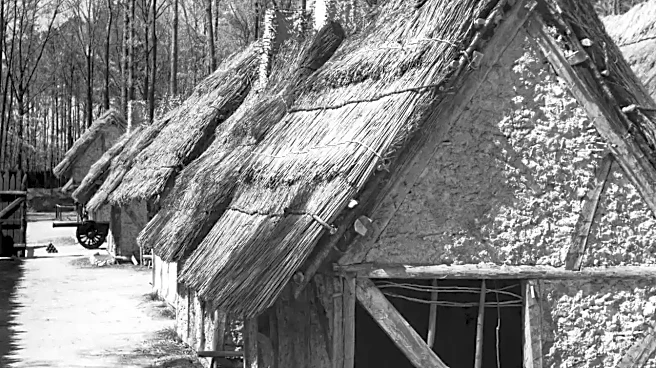
For parents and educators, the challenge is navigating this complex history with children in a way that is both honest and age-appropriate. How do you move beyond hand-traced turkeys and Pilgrim hats without overwhelming younger readers? This question is about finding resources that introduce nuance, acknowledge multiple perspectives, and foster a sense of gratitude without papering over difficult truths.While many excellent children's books exist, a standout that addresses the complexity head-on for young readers is '1621: A New Look at Thanksgiving' by Catherine O'Neill Grace and Margaret M. Bruchac. The book was created in collaboration with the Plimoth Plantation museum and Native scholars. It uses photographs of historical reenactors to debunk common myths (no, the Pilgrims didn't wear black hats with buckles) and present a more balanced view of the interactions between the English and the Wampanoag. Another key text is 'Keepunumuk: Weeâchumun's Thanksgiving Story', told from a Wampanoag perspective, which frames the story around the rhythms of the seasons and Native traditions.