



The Vision We All Recognize
Picture the 'First Thanksgiving'. You likely see somber Pilgrims in black outfits with buckled hats, sitting at long, neat tables. They are graciously serving food to their Native American guests, who are depicted in buckskins and grand feathered headdresses. This powerful image, reinforced in countless school plays and decorations, comes largely from paintings created hundreds of years after the event itself. A prime example is Jean Leon Gerome Ferris’s ‘The First Thanksgiving 1621’, painted around 1912 as part of a series meant to create a heroic and unified American story. These artists weren't trying to be deceptive; they were crafting a national myth. Their goal was to produce a feeling of pride and peaceful origin during a time of great
change and immigration in America. The inaccuracies served that purpose: the all-black Pilgrim garb was mostly for Sunday best, not daily wear; the Wampanoag people did not wear the Plains-style headdresses shown; and the entire scene presents a formal, pre-planned dinner party that historical evidence doesn't support.
The View from the Ground in 1621
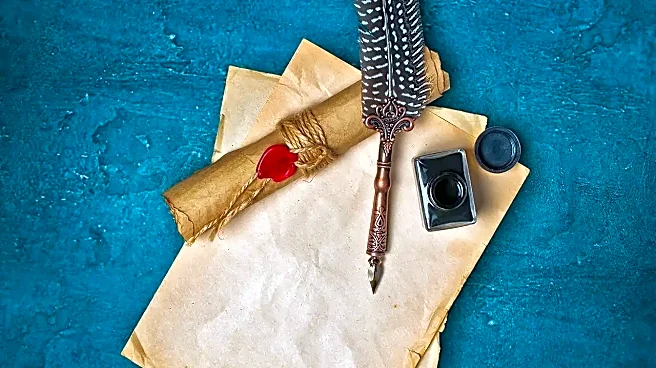
Now, let’s turn to one of the only two written, firsthand accounts of the event. In a letter dated December 11, 1621, a colonist named Edward Winslow described the settlement's successful harvest. He wrote that the governor sent four men out 'on fowling', and they gathered enough birds to last the small community nearly a week. He then adds a crucial detail: 'many of the Indians coming amongst us, and among the rest their greatest king Massasoit, with some ninety men, whom for three days we entertained and feasted'. The Wampanoag, in turn, went out and brought back five deer to contribute to the meal. What’s striking is what the letter doesn't say. There’s no mention of a formal invitation, no talk of religious thanks, and no grand ceremony. It was a harvest celebration that became a multi-day diplomatic event, likely prompted by the Wampanoag hearing the colonists 'exercising our arms' (firing their guns) and arriving to see what the commotion was. The letter is practical, not poetic.
An Image of Aspiration
So, is the painting a lie? It's more accurate to call it an aspiration. A historical painting like Ferris's isn't a photograph; it's a piece of storytelling reflecting the values of its own time. By showing the colonists as generous hosts and the Wampanoag as peaceful recipients, it creates a comforting narrative of a nation founded on harmony and benevolence. It glosses over the complex and often brutal reality of European colonization, including the diseases that had recently devastated the Wampanoag population, which was a major reason for their strategic alliance with the newcomers. The painting’s job is to tell us how America wanted to see its beginnings—as an orderly, divinely sanctioned success story. It’s a source that reveals more about the early 20th century's desire for a simple origin story than it does about the 17th century itself.
The Power of a Primary Source
The letter, on the other hand, is a snapshot. It’s a primary source, offering a direct, if incomplete, window into a moment. Its value is in its unadorned details and its limitations. Winslow wasn't writing for the ages; he was sharing news with a friend in England. His account gives us concrete facts: about 50 colonists, 90 Wampanoag men, a multi-day feast, and contributions of fowl and deer. But it’s just one perspective. It doesn't tell us what the Wampanoag leader, Massasoit, was thinking, nor does it capture the underlying tensions between the two groups. For many Native Americans today, the traditional Thanksgiving story is a painful reminder of the genocide and land theft that followed these early encounters. The letter doesn't capture that trauma, but its sparse, factual nature leaves room for us to ask the questions the paintings smooth over.