
Myths, Legends, and Unofficial Mercy
The origin story of the presidential turkey pardon is often traced to Abraham Lincoln. Legend holds that in 1863, Lincoln’s young son, Tad, grew fond of the turkey destined for the family's Christmas dinner
and pleaded for its life. Lincoln, a doting father, reportedly issued a reprieve for the bird, which his son had named Jack. While a touching story, this was an informal, one-time gesture for a Christmas turkey, not the beginning of an annual Thanksgiving tradition. Another common misconception credits Harry S. Truman with starting the tradition in 1947. That year, the National Turkey Federation and the Poultry and Egg National Board began formally presenting a turkey to the president. However, records from the Truman Library confirm he did not 'pardon' the birds; in fact, he publicly remarked that they would 'come in handy' for dinner. For decades, presidents including Dwight D. Eisenhower simply accepted the birds, which were often destined for the holiday table.
From Dinner Table to Petting Zoo
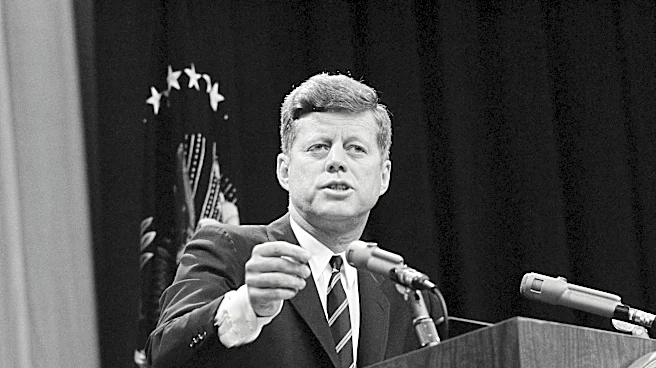
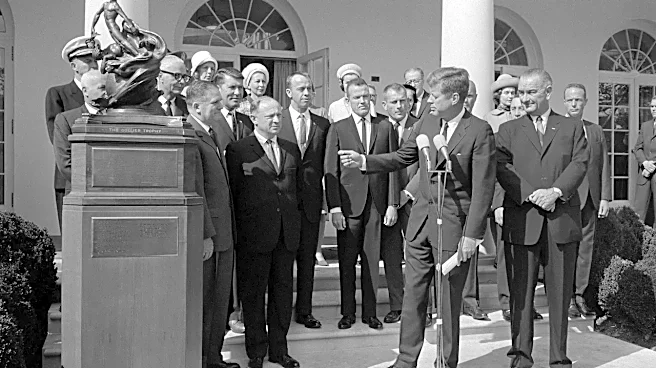
A shift began to occur in the 1960s and 70s. In November 1963, just days before his assassination, President John F. Kennedy was presented with a 55-pound turkey wearing a sign that read, 'Good Eating, Mr. President'. Kennedy spontaneously sent the bird back to the farm, saying, 'We'll just let this one grow'. While some newspapers used the word 'pardon' to describe the act, it wasn't an official decree. Subsequent First Ladies, like Patricia Nixon and Rosalynn Carter, began sending the turkeys to live at petting zoos or farms, but without the formal ceremony we know today. The practice of sparing the turkey became more regular under President Ronald Reagan, who began sending the birds to farms and zoos. In 1987, while deflecting questions about the Iran-Contra affair, Reagan jokingly said he would have pardoned that year's turkey if it wasn't already headed to a petting zoo. It was the first time a president publicly used the term in this context, but it was still an off-the-cuff remark.
The 1989 Moment That Changed Everything
The annual ritual as we know it was officially born on November 17, 1989, with President George H.W. Bush. During the presentation ceremony for a 50-pound turkey, with animal rights protestors nearby, Bush made a decisive and formal declaration. Looking at the restless bird, he announced, 'Let me assure you, and this fine tom turkey, that he will not end up on anyone's dinner table, not this guy. He's granted a Presidential pardon as of right now.' This was the first time a president explicitly and formally used the language of a 'pardon' as the central purpose of the ceremony. With that statement, Bush transformed what had been an inconsistent and informal gesture into a deliberate and public act of presidential clemency. The pardoned turkey was then sent to live out its days at Frying Pan Farm Park in Herndon, Virginia.
An Enduring White House Tradition
George H.W. Bush’s 1989 pardon set an immediate and lasting precedent. Every single president since has continued the tradition, making it a fixed and expected part of the White House holiday calendar. The ceremony has grown more elaborate over time, often featuring two turkeys—a primary bird and an alternate—with names chosen by the White House, sometimes through public online polls. These lucky birds often spend the night before their big day in a luxury hotel before being retired to a university or farm to live out the rest of their natural lives. What started with informal acts of kindness and evolved through off-the-cuff remarks became, thanks to President Bush, a quintessential piece of American political theater—a lighthearted moment of unity and humor that kicks off the nation's holiday season.