



The Thanksgiving story seems simple: Pilgrims and Native Americans, sharing a friendly harvest feast. But the sanitized version many of us learned in school is more myth than history, obscuring a far more complex and consequential reality.
Myth: The Pilgrims Found an Untamed Wilderness
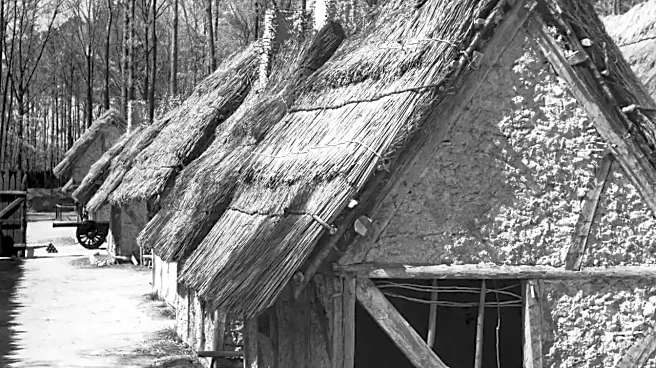
The story often begins with the Pilgrims arriving in an empty, wild land. The reality is that they settled at Patuxet, the Wampanoag name for the area, which was only unoccupied because its inhabitants had been wiped out by a devastating plague brought by earlier European visitors. The Wampanoag Nation, a confederation of some 69 villages, had a history stretching back 12,000 years, with established societies, trade routes, and alliances. The English colonists didn't step into a vacuum; they stepped into a world
reshaped by disease and populated by a wary, politically savvy nation.
Myth: A Welcoming Feast Between New Friends
The popular image of the 1621 feast is one of immediate friendship. In truth, the alliance between the Pilgrims and the Wampanoag, led by Massasoit (also known as Ousamequin), was a strategic political and military arrangement born of mutual necessity. The Wampanoag, weakened by disease, sought an ally against their rivals, the Narragansett. The English, unprepared and starving after their first brutal winter, desperately needed help. The feast itself was likely an afterthought. When the colonists celebrated their harvest with gunfire, an alarmed Massasoit arrived with about 90 warriors, likely thinking they were under attack. Finding a celebration instead, they stayed, contributing five deer to the three-day event, significantly outnumbering the roughly 50 colonists.
Myth: It Was the 'First Thanksgiving'
The 1621 gathering was a harvest celebration, not what the Pilgrims would have called a 'thanksgiving'. For the deeply religious colonists, a day of thanksgiving was a solemn affair of prayer and fasting, not feasting. The event was not repeated annually and was largely forgotten for centuries. The label 'First Thanksgiving' wasn't applied until the 19th century when the story was rediscovered and romanticized. Harvest festivals, of course, were common in cultures worldwide, including among Native American tribes, long before 1621. For many Native Americans today, the day is observed not as a celebration but as a National Day of Mourning, a solemn reminder of colonization's devastating impact.
Myth: The Feast Kicked Off a Lasting Peace
While the 1621 alliance was real, it was also fragile and short-lived. The peace deteriorated as more English settlers arrived, encroaching on Native lands and resources. Within a single generation, tensions erupted into King Philip's War (1675-1678), a brutal conflict that devastated the Wampanoag and other regional tribes, effectively ending their political independence. The storybook image of enduring harmony erases this violent and tragic aftermath, which is a core part of the historical record.
Myth: It's the Origin of the Modern Holiday
Today's Thanksgiving holiday has very little direct connection to the 1621 event. Its true architect was Sarah Josepha Hale, the influential 19th-century magazine editor who also wrote 'Mary Had a Little Lamb'. For decades, Hale campaigned to create a national Thanksgiving day, believing it could help unify a country fractured by division and heading toward civil war. She successfully persuaded President Abraham Lincoln, who, in 1863, issued a proclamation establishing the last Thursday in November as a national day of thanks, hoping to 'heal the wounds of the nation'. It was this effort, not the Pilgrim story, that created the holiday we now celebrate. The menu itself—turkey, pumpkin pie, stuffing—was largely popularized by Hale in the pages of her magazine.