
Why a Runner Is Your Secret Weapon
Think of a table runner as the anchor for your entire holiday tablescape. It’s the visual spine that holds everything together, providing an immediate color scheme, theme, and texture. Instead of agonizing over which napkins match which plates, you simply pull colors and textures from your runner. This one-and-done approach saves time, reduces stress, and makes your final table look intentional and professionally styled. A runner defines the center of the table, drawing everyone's eyes toward the feast and the centerpiece, all while protecting your table's surface and leaving plenty of room for place settings on either side.
Find Your Statement Piece
The key is to choose a 'statement' runner—one with personality. For 2026, the trend is moving beyond basic orange and brown
toward more sophisticated and versatile palettes. Look for runners in rich jewel tones like burgundy and plum, or earthy neutrals like sage green, terracotta, and warm ivory. Material is just as important as color. Natural fabrics like linen or high-density cotton offer a timeless, relaxed elegance. For a more rustic or farmhouse feel, consider burlap or a chunky woven textile. If your style is more glamorous, a runner with subtle metallic threads or delicate embroidery can provide a festive shimmer without feeling over-the-top. Don't forget to measure; a runner should typically hang 6 to 10 inches over each end of the table for a balanced, polished look.
Pull Your Palette From the Print
Once you have your runner, the rest of the decorating process becomes a simple matching game. Look at your runner and identify two or three key colors. For example, if you chose a runner with a subtle plaid of olive green, cream, and a hint of rust, you now have your palette. Use this to guide your other choices: cream-colored plates, olive green cloth napkins, and maybe a few rust-colored gourds or candles for the centerpiece. This method ensures a cohesive look without being too uniform. The goal is a table that feels coordinated, not like a pre-packaged set. Even unconventional palettes, like blue and white, can feel distinctly autumnal when anchored by a runner and paired with complementary colors like burnt orange.
Layer for Depth and Texture
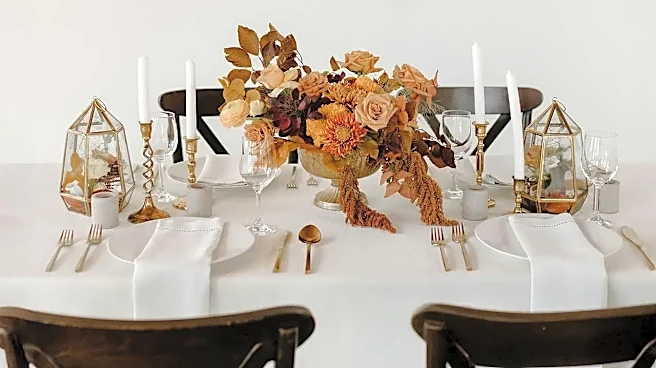
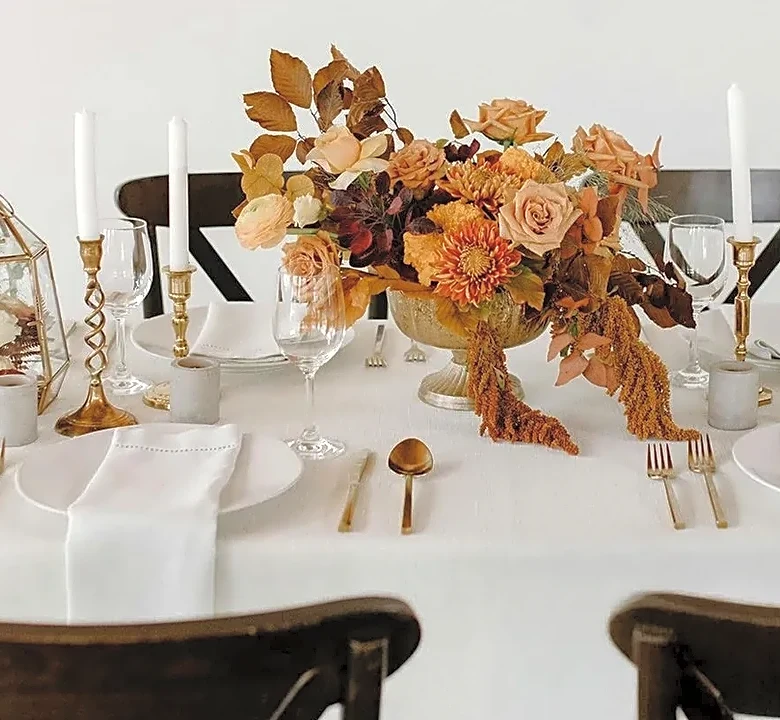
With the runner as your foundation, you can now add layers to create visual interest. Start with placemats if you like a more structured look; a natural jute or a simple linen placemat can complement a patterned runner beautifully. Next, build your centerpiece directly on the runner. To ensure guests can see each other, keep the arrangement low—a guideline is to stay under 12 inches in height. Groupings of mini pumpkins, pinecones, dried eucalyptus, or pomegranates create an organic, abundant feel. Weave in some candles for warmth, but stick to unscented varieties so they don't compete with the aroma of the food. The runner will make even a simple collection of natural elements feel like a deliberate, stylish arrangement.