



A Vision for a World at War
The story of 'Freedom from Want' begins not with a holiday, but with a war. In his January 1941 State of the Union address, President Franklin D. Roosevelt outlined four fundamental human rights he believed should be protected everywhere in the world: freedom of speech, freedom of worship, freedom from want, and freedom from fear. The ideas were lofty and, for many, abstract. The U.S. Office of War Information initially struggled to use the concepts for propaganda. Famed illustrator Norman Rockwell, however, saw an opportunity to translate these grand ideals into everyday American life. He decided to create a series of four paintings, with 'Freedom from Want' representing the third freedom.
An Image Made of Neighbors
Rockwell famously said, 'I paint life as I would like
it to be,' and for this series, he looked to his own community in Arlington, Vermont. Instead of professional models, he hired his friends and neighbors, paying them for their time. He photographed them individually in his studio and composed the final scene on the canvas. The woman serving the magnificent turkey is Mrs. Thaddeus Wheaton, the Rockwell family's own cook. The man at the head of the table is her husband. Rockwell’s wife, Mary, and his mother, Nancy, are also among the nine adults and two children at the table. This use of real people is a key reason the painting feels so authentic and has outlasted other, stiffer patriotic art from the era.
From Propaganda to Thanksgiving Staple
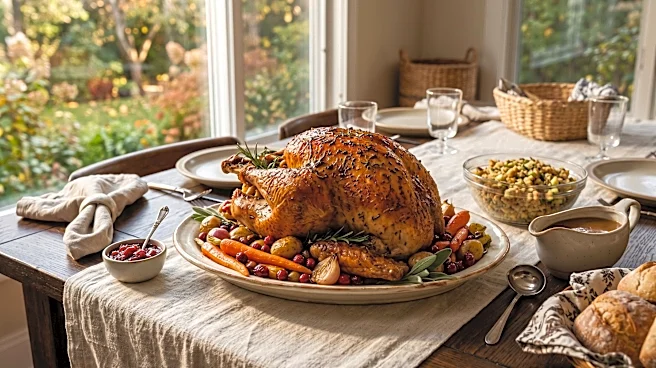
Though Rockwell started work on the painting around Thanksgiving 1942—and his family ate the turkey that served as the model—it was never intended as a specific homage to the holiday. It was published in the March 6, 1943, issue of 'The Saturday Evening Post' alongside an essay by Filipino-American writer Carlos Bulosan. The painting was an immediate sensation. The U.S. Treasury Department, which had initially passed on Rockwell's offer, sent the original 'Four Freedoms' paintings on a 16-city tour that helped raise over $132 million in war bonds. While its official purpose was to embody economic security during a time of global strife, the powerful imagery of a family, a feast, and a feeling of togetherness became inextricably linked with the American Thanksgiving holiday in the public's mind.
An Enduring and Complicated Legacy
Over the decades, 'Freedom from Want' has become one of the most recognized—and parodied—images in American art. Its power is proven by the endless recreations in pop culture, from 'The Simpsons' to late-night talk shows. But the painting is not without its critics. Some have called the scene overly sentimental or noted its lack of diversity, representing a narrow, white, middle-class version of the American dream. Abroad, especially in war-torn Europe, the image of such abundance was sometimes seen as a galling depiction of American excess. Rockwell himself had misgivings about painting such a large turkey while so many were starving. Yet the painting's focus isn't just the food; the people are looking at each other, not the bird. It’s a portrait of security, connection, and the simple, profound hope of being together, safe from harm.