


A Presidential Plan for Pocketbooks
The story begins not with football, but with finances. In the lingering shadow of the Great Depression, President Franklin D. Roosevelt was searching for any way to stimulate the economy. In 1939, Thanksgiving was set to fall on November 30, the last Thursday of a five-Thursday month. Retailers, led by department store magnate Fred Lazarus Jr., worried this would leave a critically short Christmas shopping season. Their pitch to the White House was simple: move Thanksgiving up a week to November 23. Roosevelt, seeing an opportunity to boost sales, agreed. In August, he issued a proclamation changing the date, believing it was a minor tweak. He underestimated the backlash. Since Abraham Lincoln had formalized the holiday in 1863, the last Thursday of November had been
the unshakable tradition. The abrupt change, announced with little warning, was met with confusion and scorn. Calendar makers were furious, and Roosevelt's political opponents decried his impulsiveness. The public was sharply divided, with polls showing a majority opposed the move, which was derisively nicknamed 'Franksgiving'.
Two Thanksgivings, One Rivalry
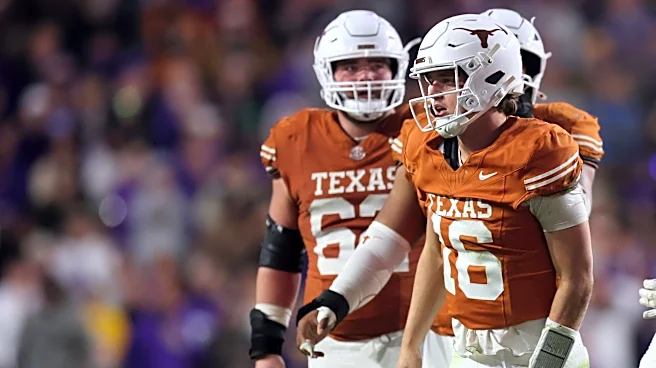
The country split. In 1939, 23 states adopted FDR's new date, while 22 stuck to the traditional November 30. Three states—Colorado, Mississippi, and Texas—hedged their bets and decided to recognize both days as holidays. This created a national headache for families, schools, and most visibly, for college football. Rivalry games are the lifeblood of the sport, and many were scheduled for Thanksgiving Day as season finales. Suddenly, teams and athletic conferences were in a bind. No game illustrated the chaos better than the annual clash between Texas and Texas A&M. Both teams were titans that year, and their game was scheduled for the 'real' Thanksgiving, November 30. While Texas officially observed both Thanksgivings, the game remained on its original date. On November 30, 1939, in front of a massive crowd in College Station, the Aggies defeated the Longhorns 20-0, capping an undefeated season that would lead to a national championship. The game program proudly declared it a Thanksgiving Day battle, even as much of the nation had already carved its turkey a week earlier.
Gridiron Confusion Across the Nation
The Texas-A&M game was just one example of the nationwide scheduling scramble. In Philadelphia, the annual Penn-Cornell game was a 43-year Thanksgiving tradition. Penn's athletic department balked at playing on the new November 23 date, as it was just five days after a tough game against Michigan. To play on the original date of November 30 would mean the game lost its holiday luster. As a compromise, the game was moved to the Saturday between the two Thanksgivings. Coaches across the country were bewildered. One University of California coach quipped, 'Perhaps, the President can oblige by changing Saturday's to some other day'. For two years, America operated with what became known as a 'Democratic Thanksgiving' (the earlier date) and a 'Republican Thanksgiving' (the traditional one), a split that mirrored the political opposition to FDR's plan. Fans were left to figure out which holiday their state, their employer, and their favorite football team were observing.
Congress Steps In to Save the Holiday
After two years of 'Franksgiving' confusion, it was clear the experiment was a failure. Studies even showed that the earlier date had not significantly boosted retail sales as hoped. The social and cultural disruption was simply not worth the marginal economic gain. In 1941, with the country on the verge of entering World War II, Congress decided to end the division. The House and Senate passed a joint resolution to create a fixed, national holiday. The resolution settled on a compromise: Thanksgiving would be celebrated on the fourth Thursday of November. This placated those who disliked the 'last Thursday' rule in months with five Thursdays, while providing a consistent and predictable date. President Roosevelt signed the bill into law on December 26, 1941, officially ending the 'Franksgiving' era. The new law ensured that Thanksgiving would fall between November 22 and 28, giving retailers their desired shopping window without upending national tradition.