

1. The 1621 Event Wasn’t a ‘Thanksgiving’
The 1621 gathering in Plymouth was not called a 'thanksgiving' by the Pilgrims who attended. For these deeply religious English colonists, a day of thanksgiving was a solemn affair dedicated to prayer and fasting to give thanks to God, not a multi-day harvest feast with guests. The event we now picture, based on a single letter by colonist Edward Winslow, was a secular, three-day harvest celebration that included hunting, games, and feasting. It involved about 50 colonists and 90 men from the Wampanoag tribe, who brought five deer as a contribution. The friendly image belies a complex political reality: the Wampanoag, weakened by disease, had formed a strategic alliance with the struggling English newcomers. The 'First Thanksgiving' label was applied
nearly 200 years later.
2. Other States Have Earlier Claims
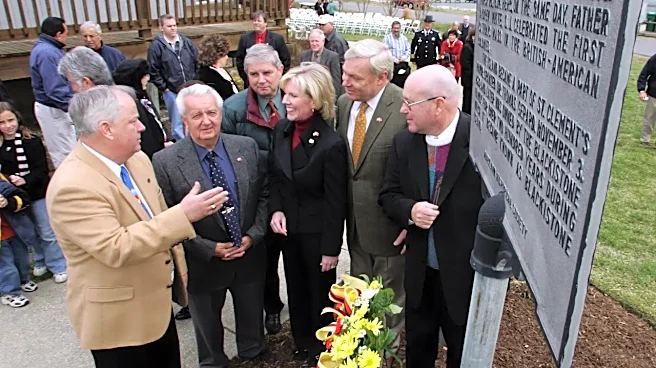
Long before the Pilgrims' feast, other European settlers held ceremonies of thanks. Spanish explorers celebrated with a thanksgiving meal near present-day St. Augustine, Florida, in 1565—more than 50 years before the Mayflower arrived. Another Spanish 'first' is claimed by Texas, where Juan de Oñate's expedition held a feast of gratitude on the banks of the Rio Grande in 1598. And even earlier English attempts include a 1578 ceremony in Newfoundland and thanksgivings held by colonists in Jamestown, Virginia, as early as 1610. These events, however, never became the seed for a national tradition. The Plymouth story won out, but these other claims prove that giving thanks upon survival in a new land was not unique to 1621.
3. The Holiday Was Invented in the 19th Century
The modern Thanksgiving holiday owes its existence not to the Pilgrims, but to the tireless 36-year campaign of a magazine editor named Sarah Josepha Hale. Starting in the 1820s, the editor of 'Godey's Lady's Book' wrote editorials and thousands of letters to presidents and politicians, arguing for a national day of unity. She believed a fixed national holiday would help bind a country increasingly divided by sectional tensions. She finally succeeded during the Civil War. In October 1863, just months after the Battle of Gettysburg, President Abraham Lincoln issued a proclamation establishing the last Thursday in November as a national day of Thanksgiving, hoping to help heal a fractured nation. It wasn't made a permanent federal holiday on the fourth Thursday of November until Congress passed a law in 1941.
4. The 'Pilgrim Story' Was a Unifying Myth
The 1621 story was popularized in the late 19th and early 20th centuries for a specific reason: to create a simple, powerful origin story for a nation absorbing millions of immigrants. As historian David Silverman notes, the myth presents friendly, generic 'Indians' welcoming settlers to a new land, teaching them to survive, and then conveniently disappearing from the narrative. This tale of peaceful beginnings offered a tidy, shared identity that glossed over the violent conflicts that actually defined much of colonial history. It became a foundational story taught in schools, cementing the image of Pilgrims and Native Americans sharing a meal as the singular, peaceful origin of a national tradition, an image that endures despite its historical inaccuracies.
5. For Many Native Americans, It's a Day of Mourning
The sanitized story of 1621 completely erases the Native American perspective. For many Indigenous people, the arrival of European colonists marks the beginning of centuries of land theft, genocide, and cultural destruction. The alliance between the Wampanoag and the Pilgrims was short-lived; within a generation, brutal conflict erupted. Since 1970, many Native Americans and their allies have observed Thanksgiving as a National Day of Mourning, gathering at Cole's Hill in Plymouth to remember their ancestors and protest the oppression and racism that Indigenous communities continue to face. This perspective doesn't deny the importance of giving thanks—a concept central to most Native cultures—but it rejects the celebratory myth that hides a painful history.