



The Thanksgiving story is a cornerstone of American identity: a peaceful meal shared between grateful Pilgrims and generous Native Americans. But the real history is far more complex, tense, and ultimately, more fascinating than the myth.
Myth: A Planned Feast of Friendship
The storybook version of Thanksgiving suggests the Pilgrims, after a successful harvest in 1621, invited their new Wampanoag friends to a pre-planned, harmonious feast to give thanks. This idyllic image portrays a simple, happy meeting of two cultures, laying a foundation of mutual respect and friendship. It’s a powerful founding myth, but it smooths over the rough, uncertain reality of the actual event.
Reality: A Tense Diplomatic Encounter
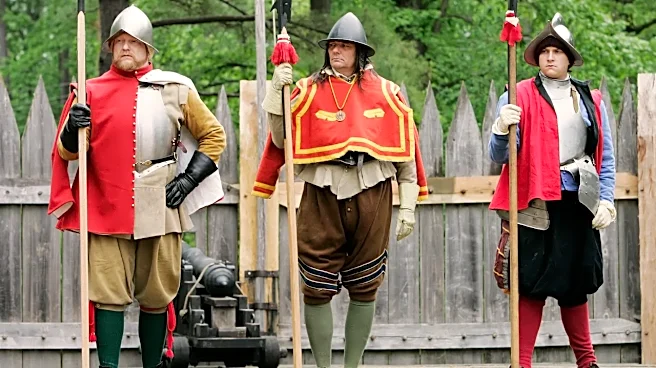
The 1621 event was not called 'Thanksgiving' by the Pilgrims; it was a secular English harvest festival. The only
primary source account, a letter by colonist Edward Winslow, describes the colonists firing their guns in celebration. In response, about 90 Wampanoag men, led by their sachem, or leader, Ousamequin (also known as Massasoit), arrived at the settlement, likely alarmed by the gunfire. Their appearance was probably not because of a formal invitation but was more of a political and military check-in. The Wampanoag had entered into a fragile, strategic alliance with the English settlers months earlier, and the gathering was as much about diplomacy and posturing as it was about food. Seeing there wasn't enough food for his men, Ousamequin sent them out to hunt, and they returned with five deer, contributing significantly to the three-day event.
Myth: A Menu of Turkey and Pumpkin Pie
Modern Thanksgiving tables groan under the weight of roasted turkey, mashed potatoes, cranberry sauce, and pumpkin pie. It’s natural to assume this menu is a direct link to that original feast, a culinary tradition passed down through the centuries. This belief reinforces the connection between our modern holiday and that singular moment in Plymouth.
Reality: Venison, Fowl, and Corn
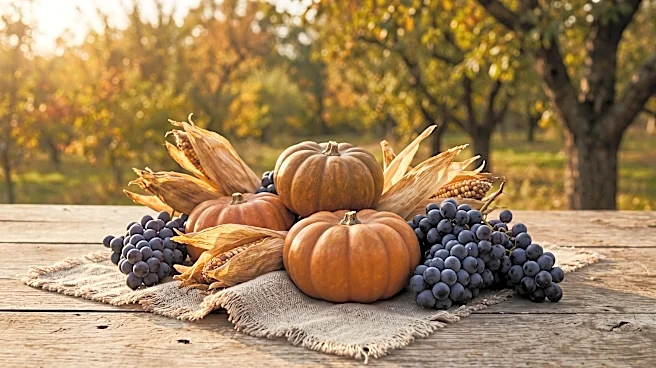
The 1621 menu was dictated by what was available in coastal New England. The five deer brought by the Wampanoag made venison the primary meat, not turkey. While the Pilgrims hunted 'fowl', this would have included ducks, geese, and swans, not necessarily the wild turkey that later became iconic. The feast likely also included seafood like eels, lobster, and clams, alongside native crops like flint corn (served as a porridge), and local vegetables and fruits such as pumpkin, squash, and plums. Crucially, the Pilgrims had no wheat flour or butter, and no ovens, making pies impossible.
Myth: An Unbroken Annual Tradition
The holiday as we know it feels like an annual event celebrated every single year since 1621, a continuous thread connecting modern America to its colonial roots. This idea gives Thanksgiving a sense of ancient, uninterrupted tradition, suggesting a consistent national impulse for gratitude.
Reality: A 19th-Century Invention
The 1621 harvest festival was a one-off event. Occasional days of 'thanksgiving' were declared for religious reasons, but there was no annual holiday. The modern version of Thanksgiving was largely the creation of Sarah Josepha Hale, a prominent 19th-century magazine editor and writer. For decades, she campaigned for a national day of unity, believing it could help soothe the growing divisions between North and South. In 1863, in the midst of the Civil War, President Abraham Lincoln finally answered her call. He issued a proclamation establishing the last Thursday in November as a national day of Thanksgiving, hoping to 'heal the wounds of the nation'. His focus was on national unity, not on the Pilgrims. The connection to the 1621 event was popularized later in the 19th century.
The Other Side of the Story: A National Day of Mourning
The simplified Thanksgiving narrative completely omits the Indigenous perspective. For many Native Americans, the arrival of European settlers was not a cause for celebration but the beginning of centuries of land theft, disease, and genocide. Since 1970, many Indigenous people and their allies have observed a 'National Day of Mourning' on Thanksgiving. This annual protest, held at Cole's Hill in Plymouth, began when Wampanoag leader Wamsutta (Frank) James was disinvited from a state dinner after officials deemed his planned speech too inflammatory. It serves as a powerful reminder of the devastating impact of colonization and protests the ongoing racism and oppression experienced by Native peoples.