



A College Rivalry Kicks Things Off
The story begins just over a decade after President Abraham Lincoln declared Thanksgiving a national holiday in 1863. The still-developing sport of American football, a gritty offshoot of rugby, was gaining a foothold in elite northeastern universities. In 1876, two of the era's dominant powers, Yale and Princeton, agreed to play a championship match on Thanksgiving Day in Hoboken, New Jersey. It was a strategic move to play on a day when most people were off work. Yale won that first contest 2-0, but the real victory was the birth of a new tradition. The game was an immediate sensation, and the idea of a high-stakes football game as holiday entertainment captured the public's imagination.
The Game Becomes a New York Spectacle
The annual Thanksgiving game between Ivy League powerhouses
quickly became the most important contest of the season. In the 1880s, the game was moved to New York City, transforming it from a simple sporting event into a major social affair. The game became the unofficial kickoff to the winter social season, drawing tens of thousands of spectators. Fans, decked out in their school's colors, would flood the city for pre-game dinners and post-game balls. Carriages decorated with orange and black for Princeton or blue for Yale paraded up Fifth Avenue toward the Polo Grounds. By 1893, the Thanksgiving showdown between an undefeated Princeton and a powerhouse Yale team drew an estimated 40,000 fans, cementing football's place at the center of the holiday.
A Nationwide Phenomenon Is Born
The popularity of the Yale-Princeton game was so immense that the concept rapidly spread across the country. By the mid-1890s, an estimated 5,000 Thanksgiving football games were being played annually, involving around 120,000 players from high schools, amateur athletic clubs, and other colleges. The tradition became so ingrained that some commentators complained football was 'ruining' the once-solemn holiday. But it was too late; the game had become as much a part of the celebration as the feast itself. High schools across the nation established fierce Thanksgiving rivalries, some of which continue to this day, uniting towns in friendly competition.
Paving the Way for the Pros
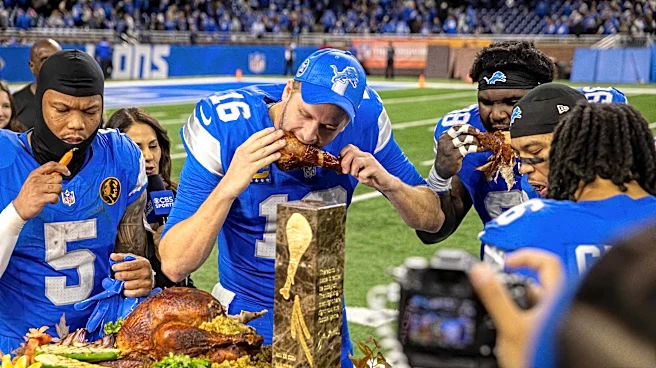
For the late 19th and early 20th centuries, football was primarily a college and amateur sport. When the American Professional Football Association—the precursor to the NFL—was founded in 1920, playing on Thanksgiving was a natural choice. The fledgling league needed to attract the legions of fans already devoted to the college game, and scheduling holiday matchups was the perfect way to do it. The tradition was famously cemented in 1934 when new owner George A. Richards had his Detroit Lions host the undefeated Chicago Bears. The game, broadcast on the radio, was a marketing masterstroke that put the Lions on the map and permanently linked the franchise to the holiday. The Dallas Cowboys followed suit in 1966, using the national stage of a Thanksgiving game to build their brand into 'America's Team'.