





For most Americans, Thanksgiving arrives on the fourth Thursday of November as an unchangeable fact of life. Yet, its date was once at the center of a national firestorm, pitting the president against states, retailers against traditionalists.
The Lincoln Tradition
For over 75 years, Thanksgiving in America had a predictable rhythm. In 1863, in the midst of the Civil War, President Abraham Lincoln issued a proclamation urging Americans to observe the last Thursday of November as a day of 'Thanksgiving and Praise'. While presidents before him had declared one-off days of thanks, Lincoln's proclamation established an annual national tradition that his successors followed, creating a dependable anchor in the American calendar. For decades, this informal rule held firm,
with presidents annually affirming the last Thursday, creating a cherished and unbroken precedent.
FDR's Controversial Move
The Great Depression changed everything. In 1939, November had five Thursdays, meaning Thanksgiving would fall on the 30th. Retailers, desperate for a sales boost, worried the short Christmas shopping season would cripple an already fragile economy. Department store executives, including Fred Lazarus Jr. of Federated Department Stores (which would later include Macy's), lobbied President Franklin D. Roosevelt to move the holiday up a week. Convinced a longer shopping period would stimulate spending, FDR agreed. In August 1939, he announced that Thanksgiving would henceforth be celebrated on the second-to-last Thursday of November.
A Nation Divided by 'Franksgiving'
The public reaction was swift and fierce. The move was derided by opponents as 'Franksgiving'. Far from a simple calendar adjustment, it became a deeply partisan issue. A Gallup poll showed that Democrats narrowly favored the change, while Republicans overwhelmingly opposed it. The country split. For the next two years, Americans celebrated two Thanksgivings. In 1940, 32 states followed FDR's proclamation, while 16 defiantly celebrated on the traditional last Thursday. The confusion wreaked havoc on school schedules, vacation plans, and, ironically, the all-important college football calendar.
Congress Steps in to End the Chaos
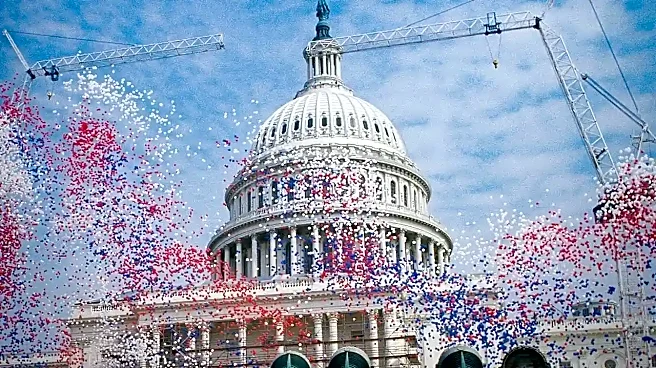
After two years of holiday disarray and a Commerce Department survey that showed the earlier date had provided no significant economic boost, FDR conceded. By 1941, it was clear the presidential proclamation alone was not enough to unify the country's celebrations. Congress decided a permanent, legislative solution was needed to end the confusion once and for all. On October 6, 1941, the House of Representatives passed a joint resolution to make Thanksgiving a federal holiday. Their proposal was simple: return to the traditional 'last Thursday' of November.
A Holiday Becomes Law
The Senate, however, offered a crucial amendment. Instead of the 'last Thursday', they proposed making the 'fourth Thursday' of November the official date. This clever compromise would accommodate years when November has five Thursdays, preserving most of the extended shopping period FDR's supporters wanted while providing the fixed date traditionalists craved. The House agreed to the change. Just weeks after the attack on Pearl Harbor plunged the nation into World War II, President Roosevelt signed the resolution into law on December 26, 1941. The fix was official, taking effect the following year.