



A Mandate for Gratitude
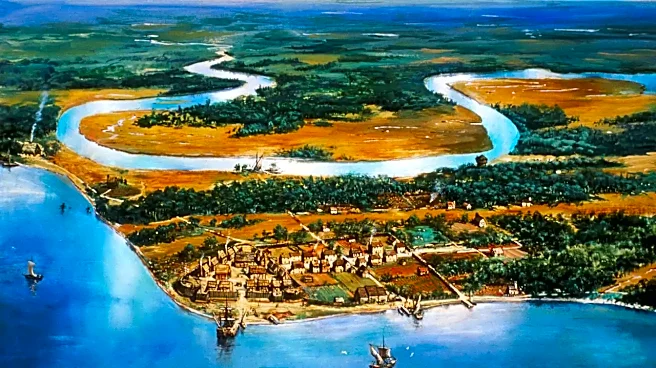
On December 4, 1619, a small ship named the Margaret arrived at a settlement called Berkeley Hundred on the banks of Virginia's James River. After a grueling two-and-a-half-month journey across the Atlantic, 38 English settlers led by Captain John Woodlief stepped onto the shore. They were not there to feast. Their charter from the London Company included a specific, non-negotiable instruction: 'We ordaine that this day of our ships arrival... shall be yearly and perpetually kept holy as a day of Thanksgiving to Almighty God'. Following orders, Woodlief and his men knelt and held a solemn Anglican service of prayer. This was not a spontaneous celebration of a good harvest; it was a pre-ordained religious observance dedicated to thanking God for
their safe passage. There was no grand meal and no Native American guests—just a formal ceremony marking the beginning of their new life.
How Plymouth Won the PR War
So if the Virginia event happened first, why does the 1621 Plymouth story dominate our national memory? The answer involves a combination of tragedy and better marketing. Just over two years after the Berkeley Hundred landing, a massive uprising by the Powhatan Confederacy in March 1622 devastated the English settlements along the James River, killing nine colonists at Berkeley alone. The settlement was abandoned, and the annual Thanksgiving tradition was lost with it. Meanwhile, the Plymouth story—a more appealing narrative of a harvest festival shared between colonists and their Native American neighbors—was championed by New England historians and writers in the 19th century. Influential figures like Sarah Josepha Hale, the editor who campaigned for decades to make Thanksgiving a national holiday, promoted the Pilgrim story. President Abraham Lincoln ultimately codified it in 1863, hoping to unite the country during the Civil War around this wholesome origin story.
A History Rediscovered
For nearly 300 years, the Virginia Thanksgiving was largely forgotten. Its story was rediscovered in 1931 when Dr. Lyon G. Tyler, a former president of the College of William & Mary and son of U.S. President John Tyler, found the original records of the Berkeley Hundred settlement. These documents, known as the Nibley Papers, contained the specific instructions for the annual day of thanks. This discovery provided concrete proof of the 1619 ceremony, igniting a friendly rivalry between Virginia and Massachusetts over the 'first' Thanksgiving. While some historians note that other, earlier thanksgivings by Spanish and English settlers had occurred, the Virginia event was unique in that its charter explicitly mandated it as a perpetual, yearly event.
More Than One 'First'
Today, the debate is less about replacing the Plymouth story and more about enriching it. In 1963, President John F. Kennedy acknowledged both claims in his Thanksgiving proclamation, referencing the traditions set forth by 'our forefathers in Virginia and in Massachusetts'. Since 1958, an annual festival and reenactment have been held at Berkeley Plantation, the modern site of Berkeley Hundred, on the first Sunday of November to commemorate the 1619 landing. These modern events often include descendants of Captain Woodlief and feature participation from local Virginia tribes like the Chickahominy Tribal Dancers. This broader understanding reveals that the American tradition of giving thanks has multiple roots. It reminds us that long before the Pilgrims' feast, other Europeans were marking their gratitude on American shores, each in their own way.