


Finding the right gift for a history lover can be tough, especially when they’ve already read the definitive books on a topic. So what do you get the person who knows the Mayflower story backward and forward? You go deeper.
For the Reader Who Wants the Wampanoag Perspective
The traditional Thanksgiving story often treats the Wampanoag people as supporting characters in the Pilgrims' journey. For a reader ready to move beyond this one-sided narrative, the best gift is a book that places Wampanoag voices and experiences at the center. This approach reframes the familiar story by exploring the political, social, and cultural world the English colonists entered. It's a vital shift in perspective that examines the decades of contact and conflict before and after 1621. A perfect choice in this category
is 'This Land Is Their Land: The Wampanoag Indians, Plymouth Colony, and the Troubled History of Thanksgiving' by David J. Silverman. Silverman, a historian at George Washington University, draws on deep archival research and collaboration with the modern-day Wampanoag community to present a narrative that begins long before the Mayflower arrived and continues to the present day, exploring why many Native people now recognize Thanksgiving as a Day of Mourning.
For the Myth-Buster
Some readers love books that peel back the layers of national mythology. The Thanksgiving story, with its themes of friendship and divine providence, is one of America's most powerful founding myths. A book that deconstructs this legend—separating fact from the feel-good fiction created in later centuries—is a fantastic gift for a critical thinker. This direction dives into how the 1621 harvest feast was transformed into the holiday we know today, a process that had more to do with 19th-century politics than 17th-century reality. Nathaniel Philbrick’s 'Mayflower: A Story of Courage, Community, and War' serves this purpose well. While popular, it’s a step beyond the simple fable, detailing the brutal realities of colonial life and the complex, often violent, 55-year relationship between the English and the Wampanoag, culminating in the devastating King Philip's War. It reveals that the period of peace was fragile and short-lived, adding necessary, and often grim, context to the single harvest meal.
For the 'How It Became a Holiday' Fan
The story of Thanksgiving doesn't end in Plymouth. In fact, the holiday as a national institution is a much more modern invention. For the history buff interested in how traditions are made, a book focusing on Thanksgiving's evolution is a great fit. This angle explores the long journey from scattered colonial proclamations to a fixed national holiday. The key figure in this story is Sarah Josepha Hale, the influential 19th-century magazine editor who campaigned for decades to make Thanksgiving a unifying national event. Melanie Kirkpatrick’s 'Thanksgiving: The Holiday at the Heart of the American Experience' is an excellent guide here. Kirkpatrick details Hale’s determined efforts, President Abraham Lincoln's 1863 proclamation during the Civil War, and how the holiday continued to evolve with the introduction of football and parades, providing a rich history of the traditions themselves.
For the Culinary Historian
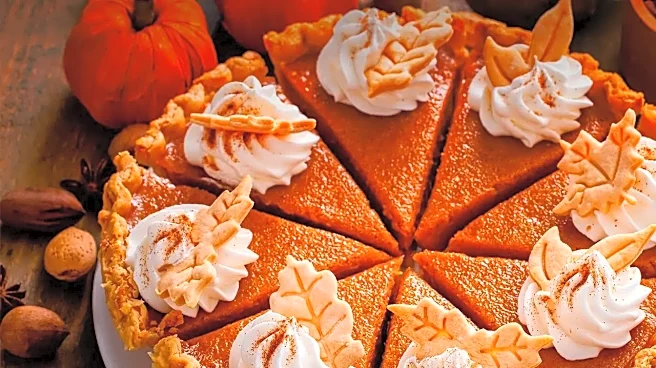
For some, history is best understood through what people ate. The Thanksgiving meal is a story in itself, full of fascinating culinary history that goes far beyond turkey and pumpkin pie. A book in this direction explores the origins of the Thanksgiving menu, revealing what was—and wasn't—on the table at the 1621 feast and how our modern dinner came to be. This is perfect for the history lover who also loves to cook. The historical record shows the 1621 menu likely included venison, waterfowl, and seafood like eels and mussels, but no pumpkin pie, as the colonists lacked butter and wheat flour. 'Historical Thanksgiving Cooking and Baking' by Robert W. Pelton collects recipes from different eras, showing how the feast changed over time. For instance, celery was considered an exotic addition in 1779. This type of book connects the reader to the past in a tangible and delicious way, exploring the very heart of the celebration: the food.
For the Big-Picture Thinker
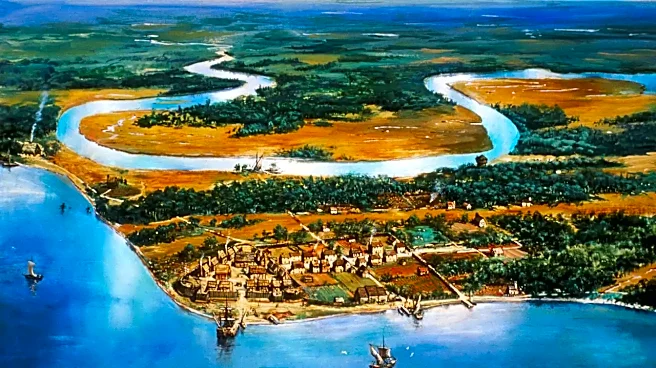
The Plymouth story didn't happen in a vacuum. For the reader who enjoys seeing how small events fit into larger historical currents, a book that places the Mayflower crossing and the first Thanksgiving in a wider context is ideal. This approach zooms out to look at the broader landscape of European exploration, the devastating impact of disease on Native populations before the Pilgrims' arrival, and the complex web of alliances and rivalries among Indigenous nations. It connects the dots between Plymouth and other colonial ventures, showing that the Pilgrims were just one part of a much larger story of encounter and conquest. While Philbrick's 'Mayflower' also fits here, another great choice could be a book that decenters Plymouth entirely, looking at other early Thanksgiving-like observances in Virginia or by Spanish settlers, reminding the reader that the American story has multiple starting points. This gift satisfies the reader who wants to understand not just what happened, but why it mattered in the grand scheme of things.