



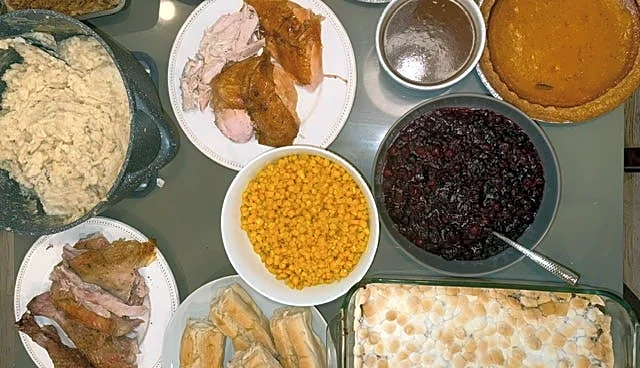
The Problem: A Last-Minute Jigsaw Puzzle
Every host knows the feeling. The turkey is resting, the side dishes are hot, and guests are mingling. It’s time to bring the food to the table, and suddenly, chaos erupts. The oval platter for the green beans doesn’t fit next to the round bowl of mashed potatoes. The cranberry sauce is relegated to a forgotten corner, and the beautiful centerpiece you arranged is now completely obscured. This last-minute spatial scramble can be one of the most stressful parts of the day. You’re forced to play a high-stakes game of Tetris with hot, heavy dishes, all while trying to maintain an air of festive calm. Planning your menu is only half the battle; planning where it all goes is the key to a smooth celebration.
The Solution: A Simple Paper Blueprint
The fix is surprisingly low-tech and incredibly
effective. Days before Thanksgiving, gather all the serving platters, bowls, and dishes you plan to use. Grab a roll of kraft paper, butcher paper, or even the back of some leftover wrapping paper, and roll it out over your buffet or dining table. Place each serving dish on the paper where you'd like it to go, considering flow and aesthetics. Once you have a layout you love, use a marker to trace the bottom of each dish directly onto the paper. Inside the outline, label what dish will go there: 'Mashed Potatoes,' 'Turkey Platter,' 'Aunt Carol’s Stuffing.' This creates a visual map of your feast, turning a frantic guessing game into a simple matter of 'paint-by-numbers' serving.
Executing the Plan: From Tracing to Serving
Once your paper map is complete, you have two options. You can leave the full paper runner on the table as a rustic, decorative element, which also doubles as a crumb-catcher for easy cleanup. Or, you can cut out each individual template. On Thanksgiving Day, lay these labeled paper cutouts on the table in their designated spots. They act as placeholders, reserving the exact amount of real estate each dish needs. As hot food comes out of the kitchen, you or a helper can simply remove the paper placeholder and set the dish down in its pre-planned spot. No shuffling, no stress. This method also allows you to place serving utensils with each template ahead of time, ensuring you’re not digging through a drawer looking for a gravy ladle at the last second.
Advanced Tactics for the Ambitious Host
Once you've mastered the basic technique, you can elevate your tablescape strategy. Use your paper templates to consider vertical space; note which dishes might be placed on a cake stand or riser to add height and dimension to your display. Think about traffic flow. Place the most popular dishes, like the turkey and potatoes, in easily accessible spots, and consider putting plates at the beginning of the line and silverware at the end if you're serving buffet-style. You can also use the paper to add helpful notes for your guests, such as labeling dishes that are gluten-free, vegan, or contain nuts. It’s a thoughtful touch that guests with dietary restrictions will appreciate. This level of planning ensures your table is not only organized but also functional and considerate.