





The Myth of the Happy Harvest
The story many Americans learn is a simple, heartwarming one: in 1621, struggling Pilgrims, having survived their first harsh winter, shared a harmonious feast with their friendly Native American neighbors, the Wampanoag. It’s a tale of mutual gratitude and cooperation that has been taught in schools and depicted in pageants for generations. This narrative became particularly popular in the 19th century when, in the midst of the Civil War, President Abraham Lincoln declared Thanksgiving a national holiday to promote unity. The story of Pilgrims and Indians breaking bread together became a foundational myth for a nation in desperate need of one—a bloodless, peaceful origin story. The only problem is that this version is more fiction than fact,
leaving out the darker context of why this meeting happened and what came next.
A More Complicated Truth
The historical record tells a far more complex story. The Wampanoag people, led by their sachem Ousamequin (also known as Massasoit), did participate in a three-day harvest event with the English colonists. But their motives were strategic, not sentimental. The Wampanoag had been devastated by a plague, likely brought by earlier European traders, which killed up to 90% of some coastal populations between 1616 and 1619. This left them vulnerable to their rivals, the Narragansett tribe. An alliance with the English, who possessed powerful weapons, was a political calculation for survival. According to some accounts, the Wampanoag men showed up at the Plymouth settlement not because they were invited to a planned dinner, but because they heard celebratory gunfire and came to see if the colony was under attack. They then contributed five deer to a feast that was already happening. This was less a friendly dinner party and more a moment of temporary, cautious diplomacy.
The National Day of Mourning
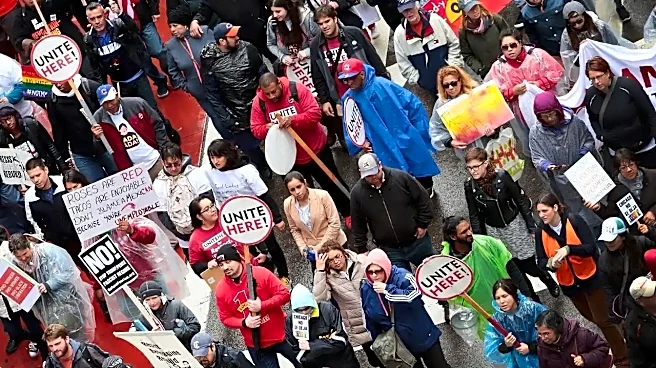
For many Native Americans, Thanksgiving is not a day of celebration but a solemn reminder of loss. Since 1970, the United American Indians of New England (UAINE) has organized a 'National Day of Mourning' on Cole's Hill in Plymouth, overlooking Plymouth Rock. This tradition began when Wamsutta (Frank) James, an Aquinnah Wampanoag man, was invited to speak at a 350th anniversary celebration of the Mayflower's landing. When the organizers censored his speech for its honest portrayal of colonialism's brutal impact, he refused to deliver a sanitized version and instead created a counter-event. The National Day of Mourning honors Native ancestors and protests the ongoing racism and oppression experienced by Indigenous people, framing the arrival of colonists not as a beginning to celebrate, but as the start of a genocide and the theft of their lands.
The Uncomfortable Dinner Table
This brings us back to the modern Thanksgiving table, where the desire for a peaceful gathering often clashes with these difficult truths. Bringing up the Wampanoag perspective, the subsequent wars, or the concept of a National Day of Mourning can be seen as deliberately provocative—a disruption of the expected gratitude and lightheartedness. Family members may urge a change of subject, arguing the holiday isn't the 'time or place' for politics or uncomfortable history. This impulse is understandable; the holiday is, for many, a rare chance to connect with loved ones. Yet, this insistence on conflict avoidance serves to perpetuate the very historical erasure that the 'happy harvest' myth was built on. It prioritizes a fragile, performative unity over a more honest and resilient one.
Toward a More Meaningful Unity
What if true unity isn’t about avoiding difficult topics, but about having the courage to face them together? Acknowledging the full scope of history doesn't require abandoning gratitude or family traditions. As Wampanoag spokesman Steven Peters has said, gathering with family and giving thanks is a good thing, but he also asks people to remember what happened to his people—the history as it was recorded, not just the comforting narrative. Engaging with this history is not an attack on American values, but an enrichment of them. It allows for a more mature patriotism, one that can hold both gratitude for the present and grief for the past. It suggests that the strongest families, and the strongest nations, are not those that ignore their flaws, but those that are brave enough to confront them, learn from them, and strive to be better.