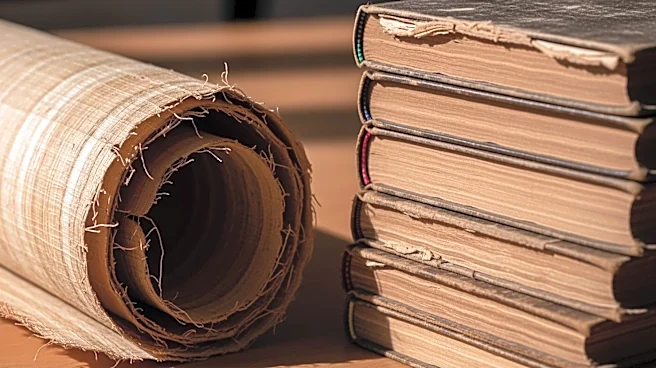







Papyrus, a material made from the papyrus plant, was a fundamental writing surface in ancient times. Initially used in the form of scrolls, papyrus eventually evolved into codices, resembling modern books. This transition marked a significant development in the history of writing, influencing how texts were recorded and preserved.
The Era of Papyrus Scrolls
In ancient Egypt, papyrus was primarily used to create scrolls, which were the standard form of written documents. These
scrolls were made by joining sheets of papyrus side by side and rolling them up. The scroll format was practical for the time, allowing for the storage and transport of lengthy texts.
Papyrus scrolls were used to record a wide range of information, from religious texts like the Egyptian Book of the Dead to medical treatises and mathematical works. The scrolls provided a durable medium for preserving knowledge, contributing to the rich cultural and intellectual heritage of ancient Egypt.
Transition to Codices
Over time, the use of papyrus evolved from scrolls to codices, a format more akin to modern books. This transition likely occurred as a result of the limitations of scrolls, which were not pliable enough to fold without cracking. Codices, on the other hand, allowed for easier access to specific sections of text and were more convenient for reading and storage.
The adoption of the codex format was particularly significant in the Greco-Roman world, where early Christian writers embraced it for religious texts. The codex offered several advantages over scrolls, including the ability to write on both sides of the papyrus and the ease of handling larger volumes of text.
Impact on Writing and Preservation
The shift from scrolls to codices had a profound impact on the preservation and dissemination of written works. Codices were more durable and easier to use, making them a preferred format for important texts. This transition also facilitated the spread of knowledge, as codices were more accessible and practical for readers.
Despite the eventual decline of papyrus in favor of materials like parchment and paper, the evolution from scrolls to codices represents a pivotal moment in the history of writing. The innovations in papyrus use laid the groundwork for the development of modern books, highlighting the enduring influence of this ancient material on the written word.