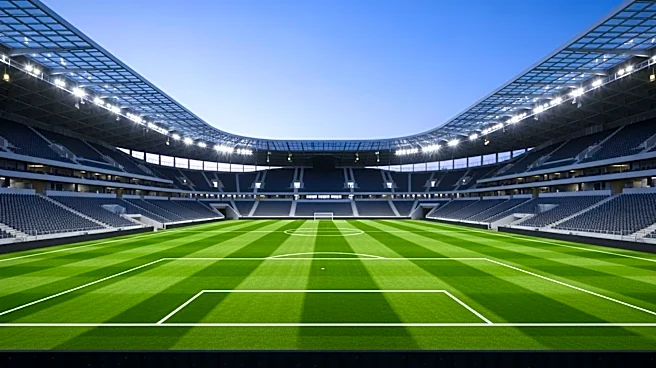

Saitama Stadium 2002 played a pivotal role during the 2002 FIFA World Cup, hosting several key matches, including Japan's first game against Belgium. As the largest football-specific stadium in Japan,
it was a central venue for the tournament, showcasing the country's ability to host international sporting events. This article delves into the stadium's significance during the World Cup and its impact on Japanese football.
A Key Venue for the World Cup
Saitama Stadium 2002 was constructed specifically to host matches for the 2002 FIFA World Cup, with its completion in September 2001. The stadium's capacity of 63,700 made it the largest football-specific stadium in Japan, and it was one of the largest in Asia. During the World Cup, it hosted four matches, including Japan's opening match against Belgium, which ended in a 2-2 draw. This match was significant as it marked Japan's debut in the World Cup as a co-host nation.
The stadium's design and capacity were crucial in accommodating the large number of fans attending the World Cup matches. Its ability to host such a significant event demonstrated Japan's readiness to be a part of the global football community. The stadium's role in the World Cup also helped to elevate its status as a premier venue for international football events.
Impact on Japanese Football
The 2002 FIFA World Cup was a turning point for Japanese football, and Saitama Stadium 2002 was at the heart of this transformation. Hosting World Cup matches brought international attention to Japanese football and helped to increase its popularity within the country. The stadium became a symbol of Japan's commitment to developing its football infrastructure and promoting the sport at a national level.
The exposure from the World Cup also contributed to the growth of the J1 League, Japan's top professional football league. Saitama Stadium 2002 became the home ground for the Urawa Red Diamonds, one of the league's most successful clubs. The stadium's association with the World Cup helped to attract more fans to domestic matches, boosting the league's profile and popularity.
Legacy of the 2002 FIFA World Cup
The legacy of the 2002 FIFA World Cup is still felt in Japan today, with Saitama Stadium 2002 continuing to be a key venue for football events. It regularly hosts matches for the Japan national football team, particularly during FIFA World Cup qualifying matches. The stadium's continued use for international and domestic matches highlights its lasting impact on Japanese football.
In addition to football, Saitama Stadium 2002 has hosted other significant events, including the semi-finals of the football tournament at the 2020 Summer Olympics. Its ongoing relevance as a major sports venue underscores the importance of the 2002 FIFA World Cup in shaping Japan's sporting landscape.