






Dumbbells are a staple in modern fitness routines, but their history stretches back thousands of years. Originating in ancient Greece, dumbbells have evolved significantly over time, adapting to the needs and innovations of different cultures. This article explores the fascinating journey of dumbbells from their early beginnings to their current form as essential tools in weight training.
Ancient Beginnings
The concept of using weights for physical training can be traced
back to ancient Greece. The Greeks used halteres, which were similar to modern dumbbells, for both lifting exercises and as aids in the long jump. These early weights were typically made of stone and were integral to the athletic practices of the time. The use of halteres highlights the Greeks' understanding of resistance training and its benefits for strength and athletic performance.
In addition to Greece, India also has a long history of using weights for training. The Indian club, known as the Meel, was used for over a millennium. Shaped like a club, the Meel served as a precursor to both dumbbells and barbells. It was commonly used in pairs by wrestlers and bodybuilders to enhance strength and muscle size. This demonstrates the widespread recognition of weight training's value across different cultures.
The Term "Dumbbell"
The term "dumbbell" originated in late Stuart England. In 1711, poet Joseph Addison mentioned exercising with a "dumb bell" in an essay published in The Spectator. The name likely derived from the apparatus used to ring church bells, minus the bell itself, making it "dumb" or noiseless. This etymology reflects the adaptation of existing tools for exercise purposes, a theme that continues throughout the history of dumbbells.
By the early 17th century, the familiar shape of the dumbbell, with two equal weights attached to a handle, had appeared. This design has persisted, with variations, into the present day, underscoring its effectiveness and simplicity.
Modern Variations
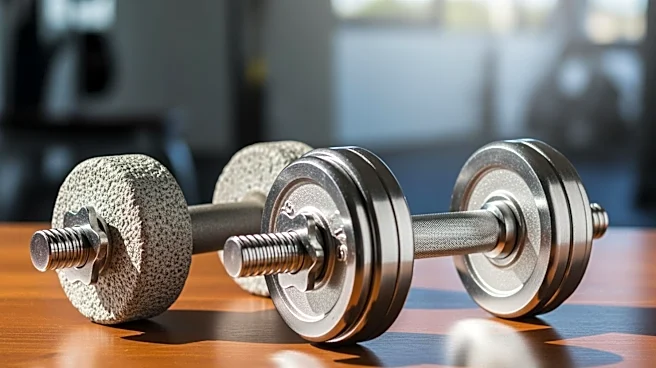
Today, dumbbells come in various forms, including fixed-weight, adjustable, and selectorized types. Fixed-weight dumbbells are often made of cast iron, sometimes coated with rubber for comfort. Adjustable dumbbells allow users to change the weight by adding or removing plates, offering flexibility for different exercises. Selectorized dumbbells simplify weight adjustment through mechanisms like dials or pins, making them convenient for quick changes during workouts.
These modern variations reflect the ongoing innovation in fitness equipment, catering to diverse needs and preferences. Dumbbells remain a versatile and essential component of strength training, continuing their legacy from ancient times to the present.