

Honda's i-VTEC technology represents a significant advancement in engine design, combining performance with fuel efficiency. Introduced in 2001, this system has evolved to become a cornerstone of Honda's engine lineup. By adjusting valve timing and lift based on engine speed, i-VTEC optimizes engine performance across a range of conditions. This article explores the development and advancements of i-VTEC technology, highlighting its impact on Honda's engine performance.
The Birth of i-VTEC
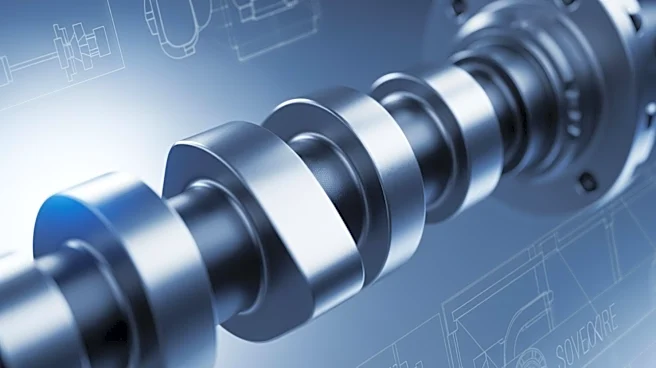
The i-VTEC system, which stands for intelligent Variable Valve Timing and Lift Electronic Control, was first introduced in 2001. It marked a significant evolution from Honda's original VTEC system. The i-VTEC technology was initially implemented in Honda's K-series four-cylinder engines, debuting in the United States with the 2002 Honda CR-V. This system was designed to enhance engine performance by controlling the timing and lifting of camshafts based on engine speeds.
At low engine speeds, the i-VTEC system opens the valves a small amount to achieve optimal fuel efficiency. As the engine speed increases, the valves open wider to enhance performance. This dual approach allows for a balance between power and efficiency, making it a versatile solution for various driving conditions.
Advancements in i-VTEC Technology
Over the years, Honda has continued to refine and expand the capabilities of the i-VTEC system. One of the key advancements is the integration of Variable Timing Control (VTC), which provides continuously variable timing of camshaft phasing on the intake camshaft. This addition allows for even greater optimization of torque output, particularly at low and midrange RPMs.
In 2003, Honda introduced a new mechanism with the V6 3.0-liter i-VTEC engine, incorporating Variable Cylinder Management (VCM) technology. This system allows the engine to run on six cylinders during acceleration but switches to three cylinders during cruising and low engine loads, further enhancing fuel efficiency without sacrificing performance.
i-VTEC in Hybrid Vehicles
Honda has also integrated i-VTEC technology into its hybrid vehicles, working in tandem with electric motors to maximize efficiency. In the 2006 Civic Hybrid, the 1.3-liter i-VTEC engine featured a 3-stage valve design, an advancement from the previous year's technology. This design allowed the engine to operate on low-speed timing, high-output timing, or 4-cylinder idling, depending on driving conditions.
The integration of i-VTEC in hybrid models has contributed to Honda's reputation for producing environmentally friendly vehicles. The Civic Hybrid, for instance, was recognized as the third "Greenest Vehicle" in 2009, showcasing the effectiveness of combining i-VTEC with hybrid technology.
Overall, Honda's i-VTEC technology has undergone significant advancements since its introduction, continually improving engine performance and efficiency. Its integration into both traditional and hybrid vehicles highlights its versatility and importance in Honda's engine lineup.