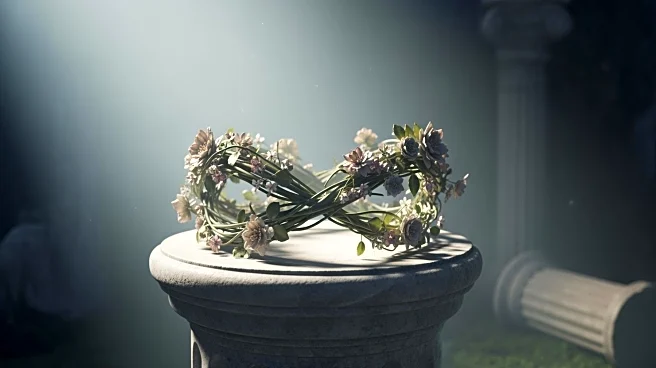




The opera 'La Flora' draws heavily from Roman mythology, specifically the tale of Chloris and Zephyrus. This mythological story serves as the foundation for the opera's libretto, written by Andrea Salvadori. In this article, we delve into the mythological roots of 'La Flora' and how they were adapted for the stage.
Chloris and Zephyrus: A Mythological Love Story
The story of Chloris and Zephyrus is recounted in Book V of Ovid's *Fasti*. Chloris, a field nymph, is transformed into the goddess Flora
through her marriage to Zephyrus, the wind god. This transformation is central to the opera 'La Flora', which explores themes of love, transformation, and the natural world.
In the myth, Zephyrus falls in love with Chloris and pursues her. Despite initial resistance, Chloris eventually reciprocates his feelings, leading to their union. This marriage not only transforms Chloris into Flora but also brings flowers to the earth, symbolizing the arrival of spring. The mythological narrative provides a rich backdrop for the opera, allowing Salvadori to weave in allegorical references to political power and the beauty of Tuscany.
Adaptation for the Opera
Andrea Salvadori's adaptation of the myth for 'La Flora' involved creating a libretto that balanced the mythological elements with the political and cultural context of the time. The opera's prologue and five acts follow the story of Chloris and Zephyrus, incorporating additional characters and themes to enhance the narrative.
Salvadori's libretto includes allegorical references to the Medici dynasty and the political landscape of Tuscany. By transforming the myth into an opera, Salvadori was able to explore themes of love, power, and transformation in a way that resonated with contemporary audiences. The music composed by Marco da Gagliano and Jacopo Peri further enriched the narrative, bringing the mythological story to life on stage.
The Legacy of 'La Flora'
The mythological roots of 'La Flora' have contributed to its enduring legacy. The opera's exploration of love and transformation, set against the backdrop of Roman mythology, has captivated audiences for centuries. Several arias from the opera, such as "Lamento di Clori" and "Dormi, Amore", continue to be performed as concert pieces, showcasing the timeless appeal of the story.
'La Flora' remains a testament to the power of mythology in art, demonstrating how ancient stories can be adapted to reflect contemporary themes and cultural contexts. Through its mythological foundation, 'La Flora' has secured its place in the history of opera, offering a glimpse into the rich tapestry of Roman mythology and its influence on the arts.