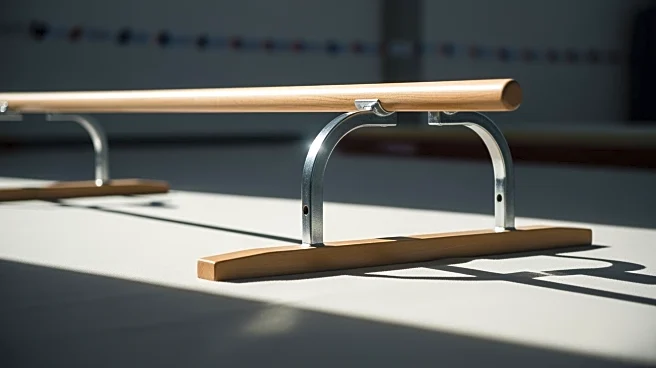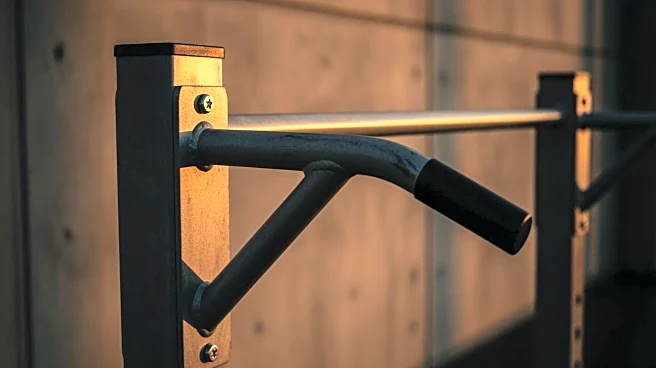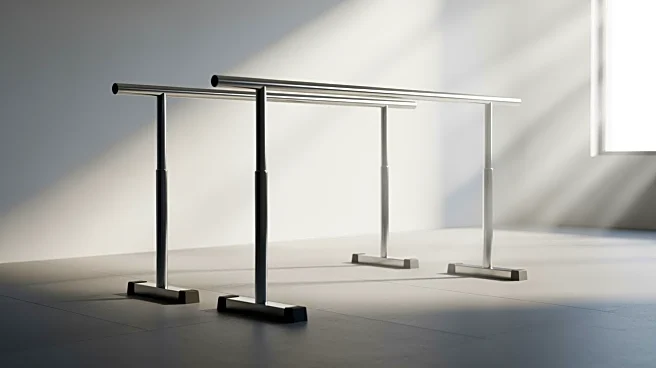


The dip bar is a staple in the world of calisthenics, offering a versatile platform for strength training exercises. This U-shaped piece of equipment is designed for performing dips, a popular exercise that targets the triceps and chest muscles. As a common tool in calisthenics routines, the dip bar provides a foundation for various exercise variations, including weighted dips for added resistance.
The Role of Dip Bars in Calisthenics
Dip bars are integral to calisthenics, a form of strength
training that relies on body weight for resistance. These bars allow individuals to perform dips, which primarily train the triceps, with major synergists being the anterior deltoid, the pectoralis muscles, and the rhomboid muscles of the back. The dip exercise is performed by supporting oneself on the dip bar with arms straight down and shoulders over the hands, then lowering the body until the arms are bent to a 90-degree angle at the elbows, and lifting back to the starting position.
The versatility of dip bars extends to various exercise variations. For instance, weighted dips can be performed by adding external load via a dip belt, weight vest, or other means. This allows for progressive overload, which is essential for strength and hypertrophy gains. Additionally, dip bars can be used for straight bar dips, which involve a more pronounced forward lean and hip flexion to maintain the center of gravity.
Variations and Adaptations
Dip bars offer a range of exercise variations that cater to different fitness levels and goals. For those seeking less resistance, an assisted dip/pull-up machine can be used, which reduces the force necessary to elevate the body by using a counterweight. Resistance bands can also be hooked under the feet to assist those who lack the strength to perform a dip unassisted.
Advanced variations include the Korean dip, performed on a single straight bar with the bar behind the body, and the Russian dip, which increases elbow extension demand to activate the triceps brachii. These variations are typically executed by elite calisthenics athletes and gymnasts, showcasing the adaptability of dip bars in accommodating different skill levels.
The Impact of Dip Bars on Fitness
Dip bars are not only a tool for building upper body strength but also play a significant role in enhancing overall fitness. By engaging multiple muscle groups, dips performed on dip bars contribute to improved stability and coordination. This makes them a valuable addition to any strength training routine.
Moreover, the simplicity and accessibility of dip bars make them a popular choice for home gyms and outdoor fitness parks. Their ability to support a wide range of exercises without the need for complex equipment underscores their importance in promoting functional fitness across various environments.
In conclusion, dip bars are a fundamental component of calisthenics, offering a versatile platform for a variety of strength training exercises. Whether used for standard dips or advanced variations, they provide an effective means of enhancing upper body strength and overall fitness.