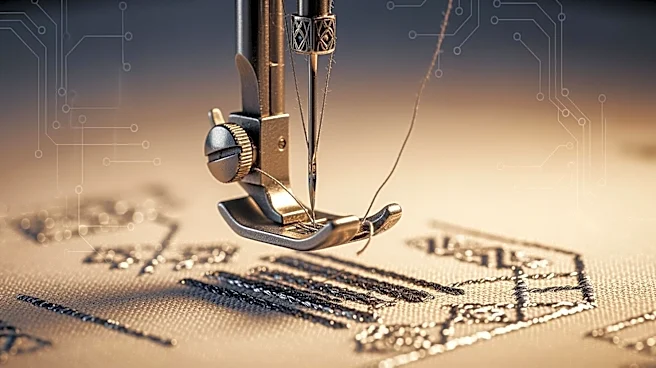



Embroidery, the art of decorating fabric with needle and thread, has seen significant advancements over the years, particularly with the advent of machine embroidery. This article delves into the historical development of machine embroidery, highlighting key technological milestones that have shaped its evolution.
Early Beginnings and Innovations
Machine embroidery began to take shape in the mid-20th century. The first significant development was the introduction of the Tajima Multi-head
Automatic Embroidery machines in 1964. This innovation marked a shift from manual to automated processes, allowing for more efficient production. By 1973, Tajima had introduced the TMB Series, a 6-needle full-automatic color-change embroidery machine, which further streamlined the embroidery process.
The 1980s saw the introduction of computerized embroidery machines to the home market. Wilcom's computer graphics embroidery design system and Melco's embroidery sample head were pivotal in this era. These innovations allowed for more intricate designs and reduced the time required for production. The economic policies of the Reagan presidency also played a role in propelling companies like Melco to the forefront of the market.
Technological Advancements in the 1990s
The 1990s were a period of refinement and expansion for machine embroidery. Tajima introduced a 12-needle machine with noise reduction mechanisms, catering to the growing demand for multi-color designs. Pulse Microsystems introduced networking capabilities, allowing embroidery machines to connect to a central server, streamlining operations and improving efficiency.
During this time, the popularity of machine embroidery as a hobby also grew, thanks to the decreasing costs of computers, software, and embroidery machines. This democratization of technology allowed more individuals to explore embroidery, leading to a surge in creativity and innovation within the field.
Modern Machine Embroidery
Today, machine embroidery is a blend of art and technology. Modern machines are highly sophisticated, with features like automatic color change, thread break detection, and high-speed stitching. Companies continue to innovate, with products like the TMAR-KC Series Multi-Head Embroidery Machine by Tajima, which features a digitally controlled presser foot.
The industry has also embraced digital solutions, with server-based embroidery engines like Stitchport allowing for factory automation of letter creation. This has transformed the apparel industry, enabling mass customization and personalization on an industrial scale.
Machine embroidery has come a long way since its inception, evolving from simple manual processes to complex computerized systems. As technology continues to advance, the possibilities for creativity and innovation in embroidery are boundless.