
Apollo 15 marked a significant milestone in the history of space exploration. As NASA's ninth crewed mission, it was launched on July 26, 1971, and became the fourth mission to land on the Moon. This mission was notable for its scientific focus and the introduction of the Lunar Roving Vehicle, which allowed astronauts to explore the lunar surface more extensively than ever before. The mission concluded successfully on August 7, 1971, despite some
controversies that followed.
Launch and Lunar Landing
Apollo 15 was launched from the Kennedy Space Center on July 26, 1971, at 9:34 am EDT. The mission was the first of the J missions, which were designed for longer stays on the Moon with a greater emphasis on scientific exploration. The crew consisted of Commander David Scott, Lunar Module Pilot James Irwin, and Command Module Pilot Alfred Worden. The mission's primary goal was to explore the Hadley Rille area, a site chosen for its geological interest.
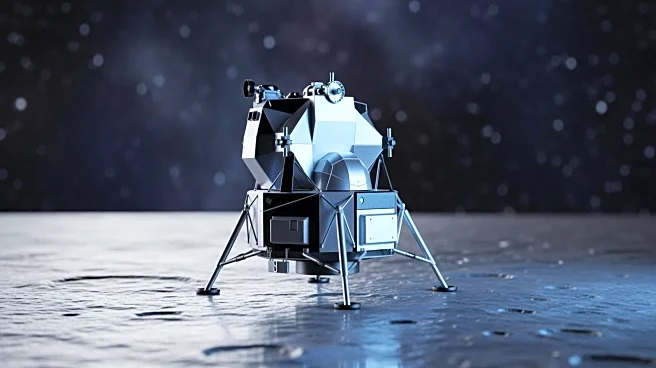
The journey to the Moon was smooth, with the spacecraft entering lunar orbit on July 29. The Lunar Module, named Falcon, separated from the Command Module, Endeavour, and began its descent to the lunar surface. On July 30, Scott and Irwin successfully landed near Hadley Rille, a deep channel on the Moon's surface. This site was selected for its potential to provide insights into the Moon's geological history.
Exploration and Discoveries
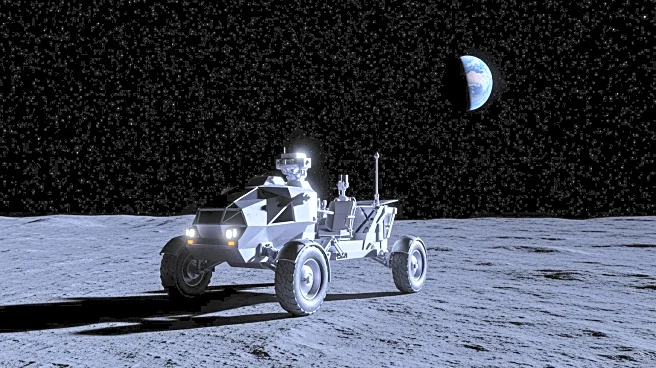
Once on the lunar surface, Scott and Irwin conducted a series of extravehicular activities (EVAs) over the course of three days. They spent a total of 18.5 hours outside the Lunar Module, using the Lunar Roving Vehicle to travel further from their landing site than any previous mission. This allowed them to collect a wide variety of samples, including the famous Genesis Rock, believed to be part of the Moon's primordial crust.
The Lunar Roving Vehicle was a significant addition to the mission, enabling the astronauts to cover more ground and conduct more extensive scientific experiments. The rover allowed them to travel several kilometers from the landing site, providing access to a diverse range of geological features. The data and samples collected during these EVAs provided valuable insights into the Moon's composition and history.
Return and Aftermath
After completing their exploration, Scott and Irwin returned to the Lunar Module and rejoined Worden in the Command Module. The crew then began their journey back to Earth, with Worden conducting the first deep-space EVA to retrieve film cassettes from the service module's scientific instrument module bay. This EVA was a critical part of the mission, as it ensured the safe return of valuable scientific data.
Apollo 15 splashed down safely in the Pacific Ocean on August 7, 1971. Despite the mission's success, it was later overshadowed by a controversy involving unauthorized postal covers carried to the Moon by the crew. These covers were sold by a German stamp dealer, leading to a reprimand for the astronauts and their exclusion from future spaceflights.
Apollo 15 was a landmark mission that expanded our understanding of the Moon and demonstrated the potential for scientific exploration in space. The mission's achievements laid the groundwork for future lunar exploration and highlighted the importance of scientific research in space missions.