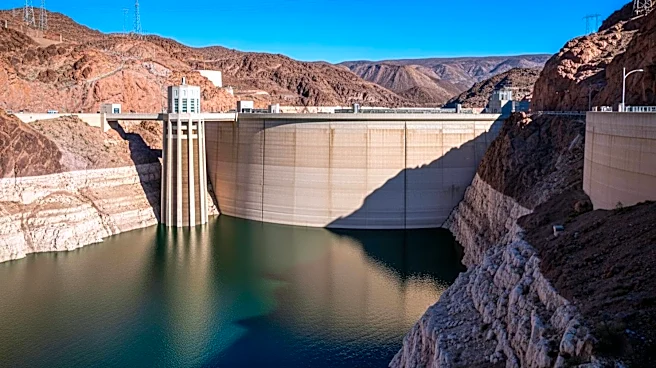




The Hoover Dam, an iconic symbol of American engineering, was not always known by its current name. The naming of the dam was a subject of significant political controversy, reflecting the turbulent political climate of the time. Originally referred to as Boulder Dam, the structure was renamed Hoover Dam in honor of President Herbert Hoover. This decision sparked a heated debate that lasted for years, highlighting the intersection of politics, public
opinion, and historical legacy.
The Initial Naming and Political Context
The idea of constructing a dam on the Colorado River had been discussed for years, and by the time the project was authorized in 1928, it was commonly referred to as the Boulder Canyon Project. The name Boulder Dam was widely used in the press and by the public, even though the final site was in Black Canyon.
In 1930, Secretary of the Interior Ray Wilbur announced that the dam would be named Hoover Dam, in honor of President Herbert Hoover. Hoover, a former engineer and Secretary of Commerce, had played a significant role in the early planning stages of the project. Wilbur justified the naming by citing a tradition of naming major infrastructure projects after sitting presidents, although this was not a universally accepted practice.
The Shift to Boulder Dam
The political landscape shifted dramatically with the election of Franklin D. Roosevelt in 1932. The new administration, led by Secretary of the Interior Harold Ickes, was not inclined to honor Hoover, who had been defeated in the election. In 1933, Ickes ordered that the dam be referred to as Boulder Dam, arguing that Wilbur's decision had been premature and that Congress had never officially ratified the name Hoover Dam.
Ickes' decision was met with mixed reactions. Some supported the change, viewing it as a correction of an overreach by the previous administration. Others saw it as a politically motivated move to erase Hoover's legacy. The debate over the dam's name became a proxy for broader political battles, reflecting the deep divisions of the era.
The Restoration of Hoover Dam
Despite the official change to Boulder Dam, the name Hoover Dam continued to be used by many, including mapmakers and the general public. The dual naming persisted for years, with both names appearing in various contexts. Memories of the Great Depression began to fade, and Hoover's reputation was somewhat rehabilitated through his humanitarian efforts during and after World War II.
In 1947, Congress passed a bill to restore the name Hoover Dam, a decision that was met with little opposition. The bill passed unanimously in both houses, reflecting a shift in public sentiment and a desire to move beyond the political conflicts of the past. Ickes, by then a private citizen, opposed the change, arguing that Hoover had little to do with the dam's construction.
The naming controversy of Hoover Dam is a fascinating chapter in American history, illustrating how infrastructure projects can become entangled in political and cultural debates. The dam's name, like the structure itself, stands as a testament to the complex interplay of politics, history, and public perception. Today, Hoover Dam is recognized not only for its engineering achievements but also for the rich history and controversy that surround its name.