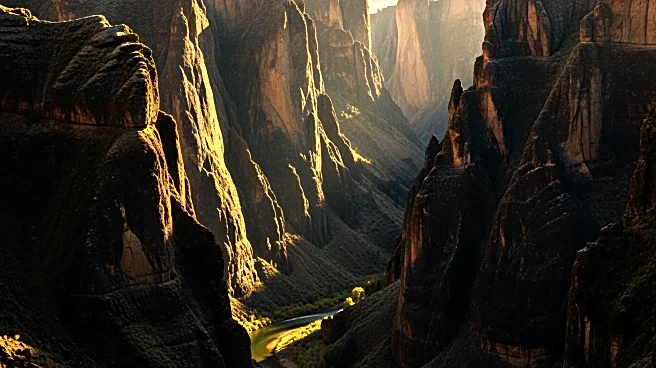




Black Canyon of the Gunnison National Park in Colorado is a geological wonder that captivates visitors with its dramatic landscapes. Established as a national park in 1999, it showcases some of the steepest cliffs and oldest rock formations in North America. The park's unique geological features are a result of millions of years of natural processes, making it a fascinating subject for geologists and nature enthusiasts alike.
Formation of the Canyon
The formation of Black
Canyon is primarily attributed to the erosive power of the Gunnison River. Over millions of years, the river carved through the hard Precambrian rocks, creating the steep and narrow canyon we see today. The river's descent is one of the steepest in North America, dropping an average of 34 feet per mile. This rapid descent, combined with the hardness of the rock, resulted in the canyon's sheer walls and narrow passageways.
The canyon's name comes from its steepness, which makes it difficult for sunlight to penetrate its depths. As a result, the canyon is often shrouded in shadow, causing the rocky walls to appear black. At its narrowest point, the canyon is only 40 feet wide at the river, highlighting the dramatic nature of its formation.
Geological Composition
The canyon's walls are primarily composed of Precambrian gneiss and schist, which formed around 1.7 billion years ago. These ancient rocks were shaped during a metamorphic period caused by the collision of volcanic island arcs with what is now Wyoming. The lighter-colored pegmatite dikes that crosscut the canyon's walls were formed later during this same period.
In addition to the Precambrian rocks, the area underwent significant geological changes during the Cretaceous and Tertiary periods. Large episodes of volcanism buried the region in volcanic ash and debris, which the Gunnison River eventually carved through to reach the hard metamorphic rocks beneath.
The Role of Uplift and Erosion
The canyon's formation was also influenced by tectonic uplift and erosion. During the Laramide orogeny, the area experienced significant uplift, raising the Precambrian rocks and setting the stage for the river's erosive power. As the river cut through the softer volcanic deposits, it eventually reached the hard metamorphic rocks, where it continued to carve the canyon at a rate of one inch every 100 years.
The combination of uplift, erosion, and the river's relentless flow created the steep, narrow canyon that is now a highlight of Black Canyon of the Gunnison National Park. This geological marvel continues to attract visitors who are eager to witness the power of natural forces at work.