




Ujjayi breathing, often referred to as the "victorious breath," is a distinctive pranayama technique used in modern yoga practices. This method is particularly associated with Ashtanga and Iyengar yoga, where it plays a crucial role in enhancing the practice. Ujjayi breathing involves a specific way of inhaling and exhaling that creates a unique sound, often likened to the ocean. This article delves into the technique of Ujjayi breathing, its application
in yoga, and its purported benefits.
Understanding Ujjayi Breathing
Ujjayi breathing is a form of diaphragmatic breathing that requires the practitioner to slightly constrict the throat muscles, specifically the glottis. This constriction causes the air to produce a whispering sound as it moves in and out of the vocal cords. The sound is intended to be audible to the practitioner but not so loud as to be heard by someone standing six feet away. This technique is integral to the flow style of yoga, particularly in Ashtanga yoga, where it is synchronized with the movement between asanas.
The practice of Ujjayi breathing is not just about the sound; it also involves a rhythmic pattern of inhalation and exhalation through the nose. In Iyengar yoga, the breath is held briefly after inhalation and exhalation, a practice known as kumbhaka. This method is said to fully expand the lungs and puff out the chest, embodying the essence of a "proud conqueror."
Ujjayi in Ashtanga and Iyengar Yoga
In Ashtanga yoga, Ujjayi breathing is practiced alongside vigorous asana sequences. The continuous flow from one pose to another is accompanied by this breathing technique, which helps maintain a steady rhythm and focus. The breath acts as a guide, ensuring that the practitioner remains present and aware throughout the practice.
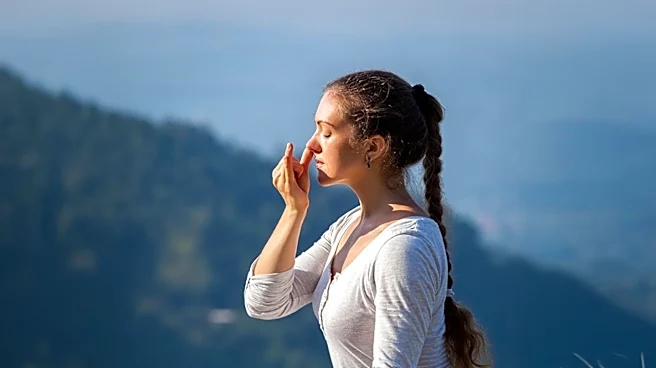
In contrast, Iyengar yoga emphasizes the precision of postures and the alignment of the body. Here, Ujjayi breathing is practiced in a seated position, with the practitioner sitting comfortably, the back straight, and the eyes closed. The focus is on the expansion of the lungs and the control of the breath, which is believed to soothe the nerves and tone the entire system.
Claimed Benefits of Ujjayi Breathing
Proponents of Ujjayi breathing claim various benefits, although these are often anecdotal and not scientifically proven. It is said to aerate the lungs, remove phlegm, and provide endurance. Additionally, it is believed to calm the mind and enhance the overall yoga experience. For those with high blood pressure or coronary issues, modifications of the practice are suggested, such as performing it while reclining and without holding the breath.
While the scientific evidence supporting these claims is limited, the practice of Ujjayi breathing remains a cornerstone of many yoga traditions. It is valued for its ability to enhance focus, promote relaxation, and integrate the mind and body during yoga practice.