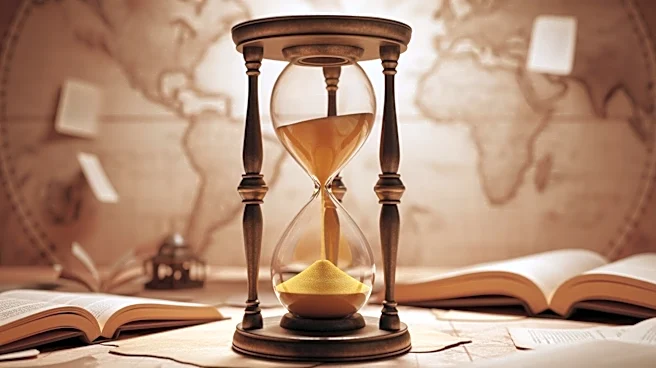






Alternate history has long been a captivating genre in literature, inviting readers to explore the possibilities of a reimagined past. From its early roots in ancient historiography to its modern-day manifestations, alternate history has evolved into a diverse and dynamic genre. This article takes a journey through time, examining the development of alternate history in literature and its enduring appeal.
Early Roots of Alternate History
The concept of alternate history can be traced
back to some of the earliest works of Western historiography. Roman historian Livy, for instance, speculated on what might have happened if Alexander the Great had survived to invade Europe. This early form of speculative thinking laid the groundwork for the development of alternate history as a literary genre.
In the 11th century, theologian Peter Damian explored counterfactual speculation in his work "De Divina Omnipotentia," considering whether God could alter past events. These early examples of speculative thinking demonstrate humanity's enduring fascination with the possibilities of a reimagined past.
The Rise of Alternate History in the 19th Century
The 19th century marked a significant turning point in the development of alternate history as a literary genre. One of the earliest works to gain widespread attention was Louis Geoffroy's "Histoire de la Monarchie universelle," which imagined a world where Napoleon's empire triumphed. This novel captured the imagination of readers and paved the way for future explorations of alternate realities.
In English literature, Nathaniel Hawthorne's short story "P.'s Correspondence" and Castello Holford's novel "Aristopia" further expanded the genre. These works explored the consequences of altered historical events, offering readers a glimpse into worlds that might have been. As the genre gained popularity, authors began to experiment with different points of divergence and narrative techniques, enriching the tapestry of alternate history literature.
Modern Manifestations of Alternate History
In the 20th and 21st centuries, alternate history has continued to thrive, with authors like H.G. Wells, Philip K. Dick, and Kim Stanley Robinson pushing the boundaries of the genre. These writers have explored a wide range of scenarios, from worlds where the Axis powers won World War II to societies shaped by different technological advancements.
The genre's enduring appeal lies in its ability to challenge readers' understanding of history and encourage them to question the inevitability of historical events. By presenting a world that is both familiar and unfamiliar, alternate history invites readers to consider the complex interplay of factors that shape our world.
In conclusion, alternate history has evolved from its early roots in ancient historiography to become a vibrant and diverse genre in literature. Through its exploration of reimagined pasts, alternate history continues to captivate readers and inspire them to reflect on the nature of history and the possibilities of what might have been.