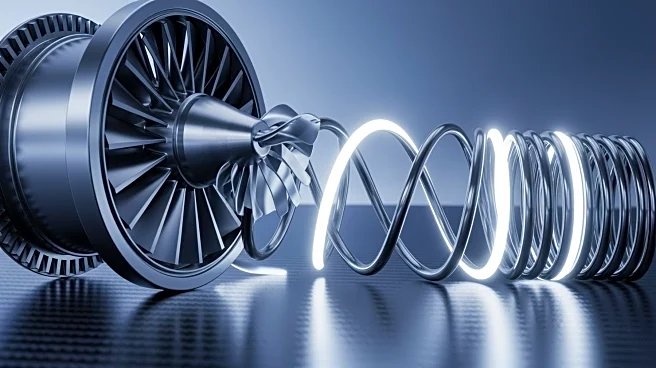




Energy Recovery Systems (ERS) have become a pivotal component in the world of Formula One racing, revolutionizing how cars harness and utilize energy. Introduced in 2014, these systems have significantly altered the dynamics of the sport, combining cutting-edge technology with the thrill of high-speed racing. This article delves into the evolution of ERS, its components, and its impact on Formula One.
The Introduction of ERS
In 2014, Formula One took a significant step towards
sustainability and efficiency with the introduction of Energy Recovery Systems. These systems were designed to capture and store energy that would otherwise be lost, particularly from braking and heat generated by the turbocharger. The stored energy is then used to provide a power boost, enhancing the car's performance on the track.
The ERS combines two main components: the Motor Generator Unit - Kinetic (MGU-K) and the Motor Generator Unit - Heat (MGU-H). The MGU-K recovers kinetic energy from braking, while the MGU-H captures heat energy from the turbocharger. This dual approach allows for a more comprehensive recovery of energy, which is then stored in batteries for later use.
Components and Functionality
The MGU-K and MGU-H are the heart of the ERS, each playing a crucial role in energy recovery. The MGU-K functions by converting the kinetic energy generated during braking into electrical energy. This energy is then stored in the car's battery and can be deployed to provide an additional power boost, giving drivers a competitive edge during races.
On the other hand, the MGU-H focuses on recovering heat energy from the exhaust gases of the turbocharger. This component not only helps in energy recovery but also aids in managing the turbocharger's efficiency, ensuring optimal performance. Together, these components allow Formula One cars to achieve a continuous power boost of approximately 160 brake horsepower (bhp), significantly enhancing their speed and performance.
Impact on Formula One Racing
The integration of ERS in Formula One has had a profound impact on the sport. It has pushed teams to innovate and adapt to new technologies, fostering a culture of continuous improvement and sustainability. The use of ERS has also made races more strategic, as teams must carefully manage their energy resources to maximize performance throughout the race.
Moreover, the introduction of ERS has aligned Formula One with global sustainability goals, showcasing the sport's commitment to reducing its carbon footprint. By harnessing energy that would otherwise be wasted, Formula One has set a precedent for other motorsports to follow, highlighting the importance of innovation in achieving environmental sustainability.
In conclusion, the evolution of Energy Recovery Systems in Formula One represents a significant technological advancement in the sport. By combining kinetic and heat recovery systems, ERS has not only enhanced the performance of Formula One cars but also contributed to the sport's sustainability efforts, paving the way for a more efficient and environmentally conscious future.