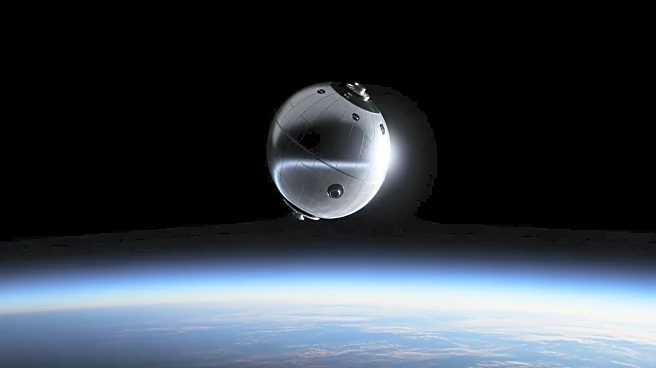




Launched in February 1961, Explorer 9 was a NASA satellite designed to study the upper atmosphere's density and composition. As part of the Explorer program, this mission marked a significant step in understanding the Earth's thermosphere and exosphere. The satellite, known as S-56A before launch, was a reflight of the failed Explorer S-56 mission and was managed by NASA's Langley Research Center.
Scientific Goals and Methods
Explorer 9's primary scientific goal was to determine
the upper atmospheric densities as a function of altitude, latitude, season, and solar activity. The satellite's symmetrical shape made it ideal for this purpose. Density values near perigee were deduced from sequential observations of the spacecraft's position using optical and radar tracking techniques. This method allowed for accurate measurements of atmospheric density until the satellite reentered Earth's atmosphere on April 9, 1964.
The spacecraft consisted of alternating layers of aluminum foil and Mylar polyester film, with white paint dots for thermal control. A 136 MHz, 15 mW beacon was included for tracking, but it failed on the first orbit, necessitating reliance on the SAO Baker-Nunn camera network for tracking. Despite this setback, the mission successfully gathered valuable data on atmospheric conditions.
Key Findings and Impact
Explorer 9's mission provided unprecedented insights into the Earth's exosphere. The satellite confirmed the daily bulge in the upper atmosphere caused by the Sun's heating and verified the model of exospheric temperature developed from other satellite data. It was discovered that the exosphere's temperature increased after geomagnetic disturbances in the ionosphere, peaking around five hours after each event.
With three years of data, scientists discerned a seasonal variation in the exosphere's density, observing a 25% increase in winter over summer at a reference latitude of 39°. The delay in temperature increase from magnetic disturbances was refined to 5.2 ± 0.4 hours. These findings significantly advanced the understanding of atmospheric dynamics and contributed to the development of more accurate models of the Earth's upper atmosphere.
Legacy of Explorer 9
Explorer 9 was the first spacecraft placed in orbit by an all-solid launch vehicle and the first successfully launched into orbit from Wallops Island. Its successful mission paved the way for future atmospheric research and demonstrated the potential of satellite-based studies. The data collected by Explorer 9 continues to be a valuable resource for scientists studying the Earth's atmosphere and its interactions with solar and geomagnetic activity.