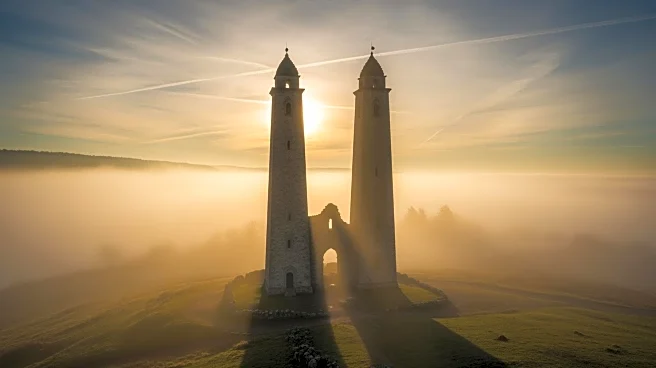




'The Two Towers,' the second volume of J.R.R. Tolkien's 'The Lord of the Rings,' is renowned for its intricate narrative structure. Unlike the linear storytelling of its predecessor, 'The Fellowship of the Ring,' this volume employs an interwoven narrative that enhances suspense and depth. This article delves into how Tolkien's use of interlacing narratives contributes to the book's compelling storytelling.
The Interwoven Narrative
In 'The Two Towers,' Tolkien breaks away
from a straightforward narrative by interlacing multiple storylines. This approach allows him to explore different character arcs simultaneously, creating a rich tapestry of events. The narrative is divided into two books: 'The Treason of Isengard' and 'The Ring Goes East.' Each book follows different groups of characters, with their paths occasionally intersecting. This structure not only builds suspense but also mirrors the complexity of the characters' journeys.
The interlacing technique is particularly effective in maintaining reader engagement. By switching between different storylines, Tolkien keeps the reader on edge, eager to discover the fate of each character. This method also allows for cliffhanger endings, such as the sudden appearance of the Ents and Huorns at Helm's Deep, which heightens the drama and anticipation.
Character Perspectives and Suspense
Tolkien's narrative style in 'The Two Towers' emphasizes the characters' perspectives, often leaving the reader as bewildered as the protagonists. This is achieved by limiting the reader's knowledge to what the characters themselves experience. For instance, the reader only learns about the events in Fangorn Forest through the eyes of Merry and Pippin, adding to the sense of mystery and discovery.
This approach also creates suspense by withholding information. The reader is left to wonder about the fate of Frodo and Sam as they journey towards Mordor, while simultaneously following the adventures of Aragorn, Legolas, and Gimli. The use of synchronizing narrative landmarks, such as the brooch dropped by Pippin, helps to orient the reader within the complex timeline, ensuring that the story remains coherent despite its intricacy.
Thematic Depth and Interconnections
The interwoven narrative of 'The Two Towers' allows Tolkien to explore themes of fate and interconnectedness. The seemingly random events that occur throughout the story often have significant consequences, highlighting the intricate web of cause and effect. For example, Merry and Pippin's encounter with the Ents leads to the downfall of Saruman, which in turn influences the larger conflict against Sauron.
This narrative style also underscores the theme of unity in diversity. Each character and group has its own motivations and challenges, yet their stories are interconnected, contributing to the overarching quest to destroy the One Ring. This interconnectedness reflects the complexity of the world Tolkien has created, where every action has a ripple effect, shaping the destiny of Middle-earth.
In conclusion, the interwoven narrative of 'The Two Towers' is a testament to Tolkien's skill as a storyteller. By weaving together multiple storylines, he creates a rich and suspenseful tale that captivates readers and deepens the thematic exploration of his epic saga.