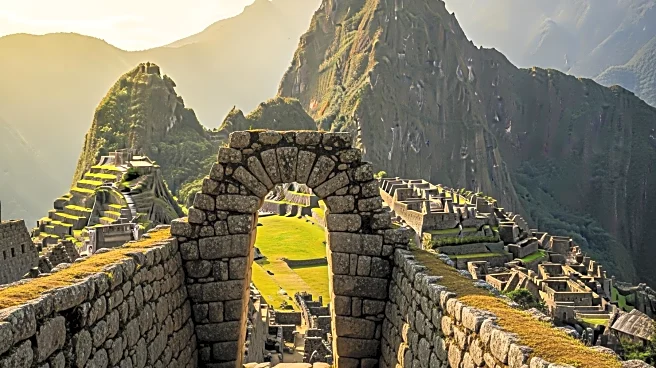

Machu Picchu, often referred to as the "Lost City of the Incas," is a 15th-century Inca citadel located in Peru. This iconic archaeological site has a rich history that spans centuries, from its construction
to its modern-day status as a UNESCO World Heritage Site. Understanding the timeline of Machu Picchu provides insight into its significance and the events that shaped its legacy.
Construction and Abandonment
Machu Picchu was built around 1450, during the height of the Inca Empire. It is believed to have served as an estate for the Inca emperor Pachacuti. The site was constructed in the classical Inca style, featuring finely crafted dry-stone walls. Notable structures include the Temple of the Sun, the Temple of the Three Windows, and the Intihuatana ritual stone. Despite its grandeur, Machu Picchu was abandoned roughly a century later, likely due to the Spanish conquest. Modern radiocarbon dating places its occupation between approximately 1420 and 1530.
The abandonment of Machu Picchu coincided with the collapse of Inca rule and the introduction of diseases by European contact. It is possible that most of its inhabitants died from smallpox before the Spanish conquistadors arrived in the area. Over the centuries, the surrounding jungle overgrew the site, and it remained largely unknown to the outside world.
Rediscovery and Recognition
Although Machu Picchu was known locally, it was brought to international attention in 1911 by American historian Hiram Bingham III. Bingham's expedition led to the site's recognition as a significant archaeological discovery. He organized further expeditions to clear and excavate the site, which helped to reveal its historical importance. In 1981, Peru declared Machu Picchu a National Historic Sanctuary, and in 1983, it was designated a UNESCO World Heritage Site.
The site's recognition continued to grow, and in 2007, Machu Picchu was named one of the New Seven Wonders of the World. Today, it attracts over 1.5 million visitors annually, making it Peru's most visited international tourist destination.
Modern-Day Challenges and Preservation
As a major tourist attraction, Machu Picchu faces challenges related to preservation and sustainability. The Peruvian government has implemented measures to manage the impact of tourism, including limiting the number of daily visitors. Despite these efforts, concerns about overcrowding and environmental impact persist.
In recent years, plans to construct a cable car and luxury hotel near the site have faced widespread protests. Critics argue that such developments could harm the ecosystem and undermine the site's cultural significance. UNESCO has considered including Machu Picchu on its List of World Heritage in Danger due to these concerns.
Overall, the historical timeline of Machu Picchu reflects its enduring legacy and the ongoing efforts to preserve its cultural and natural heritage for future generations.