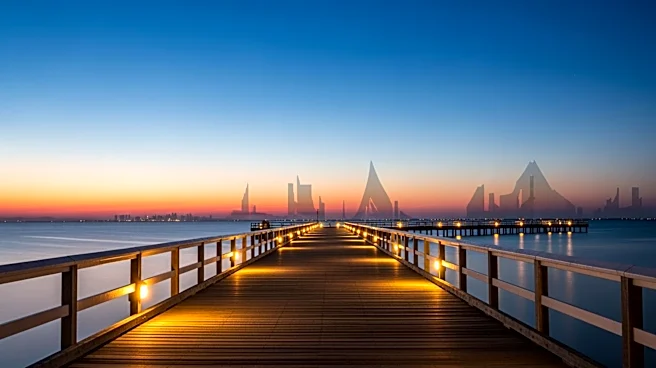





Navy Pier in Chicago, Illinois, is a testament to the city's ability to adapt and transform over time. Originally constructed in 1916 as a shipping dock, the pier has undergone numerous changes to become one of the most visited tourist attractions in the Midwest. This article explores the historical journey of Navy Pier, highlighting its various roles and transformations over the decades.
Early Years and Military Use
Navy Pier, initially known as Municipal Pier, was designed by
architect Charles Sumner Frost. It was part of the 1909 Plan of Chicago by Daniel Burnham and Edward H. Bennett. The pier's primary purpose was to serve as a dock for freighters and passenger ships, while also providing space for indoor and outdoor recreation. Built atop 20,000 logs imported from Oregon, the pier was a significant engineering feat of its time.
During World War I, the pier took on a military role, serving as a jail for draft dodgers in 1918. In 1927, it was renamed Navy Pier to honor naval veterans of the war. The pier's military significance continued into World War II, when it became a training center for the United States Navy. Thousands of people worked, trained, and lived there, utilizing its extensive facilities, including a theater, gym, and hospital.
Post-War Decline and Educational Use
After World War II, the pier's military use diminished, and it found a new purpose as an educational facility. The University of Illinois held classes at the pier to accommodate the influx of returning service members seeking higher education. However, as the university expanded, it eventually outgrew the pier, leading to its underutilization.
In the late 1950s, the opening of the St. Lawrence Seaway briefly revived commercial shipping at the pier. However, the business soon moved to more modern facilities, leaving Navy Pier in decline once again. Despite attempts to revitalize the area with events like ChicagoFest, the pier continued to deteriorate due to a lack of maintenance.
Modern Redevelopment and Tourist Attraction
In 1989, the City of Chicago initiated a redevelopment plan for Navy Pier, managed by the Metropolitan Pier and Exposition Authority. The pier was transformed into a mixed-use venue, reopening to the public in 1995 with retail, dining, and entertainment options. Further renovations in the 21st century, including the addition of a new Ferris wheel and expanded green spaces, solidified its status as a premier tourist destination.
Today, Navy Pier is a vibrant cultural hub, drawing millions of visitors annually. Its journey from a functional dock to a historic landmark reflects Chicago's dynamic spirit and commitment to preserving its rich history while embracing modernity.