







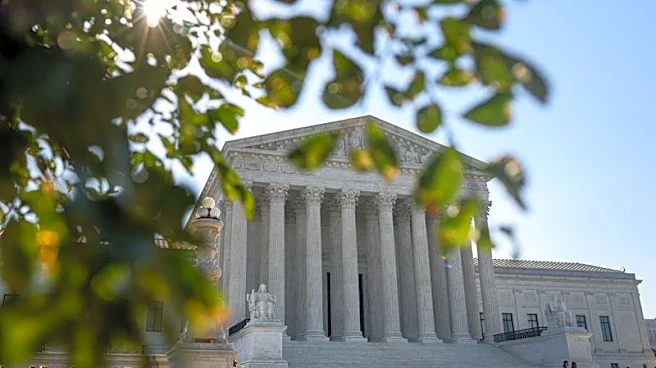
The Watergate scandal not only led to the resignation of President Richard Nixon but also resulted in a landmark Supreme Court decision: United States v. Nixon. This case set a crucial precedent regarding the limits of executive privilege. This article explores the background, proceedings, and implications of this pivotal Supreme Court ruling.
Background of the Case
The case of United States v. Nixon arose from the Watergate scandal, which began with a break-in at the Democratic
National Committee headquarters in 1972. As the investigation unfolded, it became clear that the Nixon administration was involved in efforts to cover up the break-in. Special Prosecutor Archibald Cox issued a subpoena for tape recordings of conversations held in the Oval Office, which were believed to contain evidence of the administration's involvement.
President Nixon refused to comply with the subpoena, citing executive privilege. This led to a legal battle that culminated in the Supreme Court case United States v. Nixon. The case was significant not only for its immediate impact on the Watergate investigation but also for its broader implications for presidential power.
The Supreme Court's Decision
On July 24, 1974, the Supreme Court delivered its unanimous decision in United States v. Nixon. The Court ordered President Nixon to deliver the tape recordings and other subpoenaed materials to the federal district court. Chief Justice Warren E. Burger wrote the opinion for the Court, which was joined by all the justices except for Justice William Rehnquist, who recused himself due to his prior association with the Nixon administration.
The Court acknowledged the principle of executive privilege but rejected Nixon's claim to an absolute, unqualified privilege. The decision emphasized that the needs of the judicial process could override claims of executive privilege, particularly when the materials were relevant to a criminal trial. This ruling was a significant check on presidential power, reinforcing the principle that no one, not even the president, is above the law.
Implications and Legacy
The decision in United States v. Nixon had far-reaching implications for the balance of power between the branches of government. It established a precedent that limited the scope of executive privilege, ensuring that it could not be used to shield wrongdoing. The ruling reinforced the judiciary's role as a check on executive power and underscored the importance of transparency and accountability in government.
The case also played a critical role in the Watergate scandal, as the release of the tapes provided evidence of Nixon's involvement in the cover-up, leading to his resignation. United States v. Nixon remains a landmark decision in American legal history, illustrating the enduring importance of the rule of law and the separation of powers.