





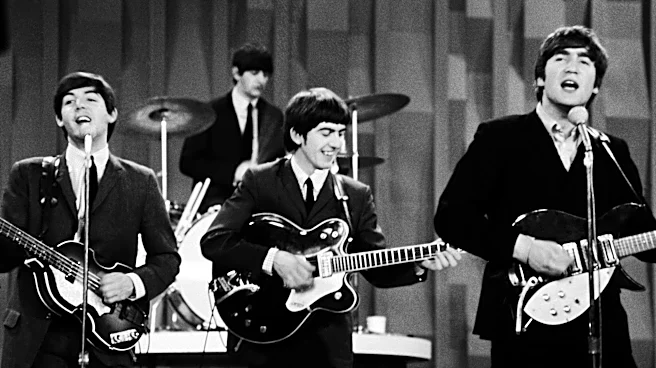

Apple Corps, founded by the Beatles in the late 1960s, was more than just a business venture; it was a creative hub that allowed the band to explore various artistic avenues. With divisions dedicated to music, film, and electronics, Apple Corps became a platform for innovation and experimentation. This article delves into the different creative projects and divisions that defined Apple Corps during its early years.
Apple Records: A Musical Legacy
The most prominent division of Apple
Corps was Apple Records, launched in 1968. This record label became the primary outlet for the Beatles' music, as well as for other artists they chose to support. Apple Records was not just a vanity label; it developed an eclectic roster of artists, ranging from Indian sitar guru Ravi Shankar to the power-pop band Badfinger.
Apple Records was instrumental in releasing the Beatles' later works, including iconic albums like "The White Album" and "Abbey Road." The label also provided a platform for other musicians, allowing them to reach a wider audience. Despite the challenges of managing a record label, Apple Records became a significant part of the Beatles' legacy, showcasing their commitment to supporting diverse musical talents.
Apple Films: Cinematic Ventures
Another key division of Apple Corps was Apple Films, which focused on producing films and documentaries. The Beatles' own projects, such as the TV movie "Magical Mystery Tour" and the animated film "Yellow Submarine," were produced under this division. These films not only showcased the Beatles' creativity but also pushed the boundaries of traditional filmmaking.
Apple Films also produced documentaries like "The Concert for Bangladesh," which highlighted the humanitarian efforts of George Harrison and Ravi Shankar. Through these cinematic ventures, Apple Films contributed to the Beatles' artistic legacy, offering audiences a glimpse into their innovative approach to storytelling and visual media.
Apple Electronics: Innovation and Experimentation
Apple Electronics, another division of Apple Corps, was established with the aim of revolutionizing consumer electronics. Headed by Yanni Alexis Mardas, also known as "Magic Alex," this division sought to create groundbreaking products. However, many of Mardas' ideas proved to be commercially impractical, and the division faced significant challenges.
Despite its shortcomings, Apple Electronics represented the Beatles' willingness to experiment and explore new technologies. The division's efforts, although not always successful, reflected the band's desire to innovate and push the boundaries of what was possible in the world of electronics.
Through these creative divisions, Apple Corps became a testament to the Beatles' artistic vision and entrepreneurial spirit. While not all ventures were successful, the company's commitment to fostering creativity and supporting artistic projects left a lasting impact on the music and entertainment industries.