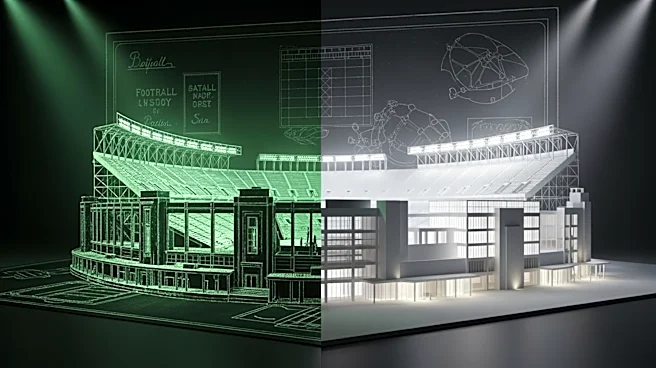




Estadio Benito Villamarín, located in Sevilla, Spain, has a rich history that reflects its evolution over the decades. As the home of Real Betis, the stadium has undergone numerous changes to accommodate the growing needs of the club and its fans. From its initial construction to recent renovations, Estadio Benito Villamarín has continually adapted to the demands of modern football.
Early Years and Initial Construction
The origins of Estadio Benito Villamarín date back to the early 20th
century. The stadium was initially designed by Spanish architect Aníbal González Álvarez-Ossorio for the Ibero-American Exposition of 1929. The construction began in 1923 and was completed by the end of 1928. The stadium was officially inaugurated on March 17, 1929, with an international match where Spain defeated Portugal 5-0. This marked the beginning of the stadium's long association with football and its role as a key venue in Sevilla.
Renovations and Expansions
Over the years, Estadio Benito Villamarín has undergone several renovations and expansions to enhance its capacity and facilities. Between 1971 and 1973, the northern and southern stands were entirely demolished and rebuilt, increasing the stadium's capacity to 48,500 spectators. Further major renovations were carried out between 1979 and 1982 in preparation for the 1982 FIFA World Cup, boosting the capacity to 50,253. These changes were crucial in ensuring the stadium could host international events and accommodate a larger number of fans.
Recent Developments
In recent years, Estadio Benito Villamarín has continued to evolve. In 2016, the southern stand was demolished for further expansion, increasing the total capacity from 52,000 to 60,721. This expansion was completed in August 2017, just in time for the 2017-18 La Liga season. The continuous development of the stadium reflects the commitment to maintaining its status as a premier venue for football in Spain. Additionally, in 2025, renovation of the main stand began, with Real Betis temporarily moving to Estadio de La Cartuja.
Estadio Benito Villamarín's evolution is a testament to its enduring significance in Spanish football. From its early days as a venue for international matches to its role in hosting World Cup games, the stadium has continually adapted to meet the needs of the sport. The ongoing renovations and expansions ensure that it remains a key fixture in the football landscape, capable of hosting both domestic and international events.