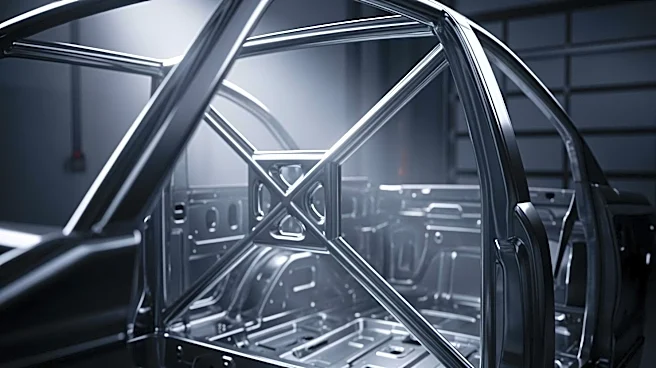






Roll cages are specially engineered frames built into the passenger compartment of a vehicle to protect occupants in the event of a crash, particularly during rollovers. These structures have evolved significantly over time, becoming a critical component in both racing and road vehicles. By stiffening the chassis, roll cages not only enhance safety but also improve vehicle performance in racing applications.
Design and Functionality of Roll Cages
Roll cages are designed to protect occupants
by maintaining the structural integrity of the vehicle during a crash. They are typically constructed from high-strength materials and can be either bolt-in or welded-in. Bolt-in cages are more straightforward and cost-effective to install, while welded-in cages offer greater strength and durability.
In racing, roll cages are essential for safety, as they help prevent the vehicle's roof from collapsing during a rollover. They also contribute to chassis stiffness, which is desirable for handling and performance. The design of roll cages varies depending on the application, with different racing organizations having specific regulations and specifications to ensure maximum safety.
Roll Cages in Road Cars
While roll cages are most commonly associated with racing, they have also found their way into road cars, particularly convertibles. Due to the lack of a protective top, some modern convertibles utilize strong windscreen frames or roll hoops behind the headrests as roll bars. These features provide moderate rollover protection and are often integrated into the vehicle's design to maintain aesthetics.
A newer form of rollover protection in road cars is the deployable roll hoop, pioneered by Mercedes-Benz in 1989. These roll hoops are usually hidden within the car's body and deploy automatically when sensors detect an imminent rollover. This technology has been adopted by several manufacturers, enhancing safety without compromising the vehicle's appearance.
Broader Applications and Benefits
Beyond cars, roll cages are also used in agricultural and construction equipment, where they are incorporated into the cab design to protect operators. This application highlights the versatility and importance of roll cages in various industries.
Overall, roll cages have become an integral part of vehicle safety, providing essential protection in the event of a crash. Their evolution from simple bars to sophisticated, integrated systems reflects the ongoing commitment to improving occupant safety. As technology advances, roll cages will likely continue to evolve, offering even greater protection and performance benefits.