
On January 30, 1835, President Andrew Jackson faced the first known assassination attempt on a sitting U.S. president. The assailant, Richard Lawrence, was a British-born American house painter whose mental
health had deteriorated significantly in the years leading up to the attack. This event, marked by misfired pistols and a presidential cane, remains a notable moment in American history.
The Day of the Attempt
The assassination attempt occurred as President Jackson was leaving the funeral of South Carolina Representative Warren R. Davis at the U.S. Capitol. Richard Lawrence, who had been observing Jackson's movements, planned to shoot the president as he entered the service but was unable to get close enough. Instead, he positioned himself near a pillar on the East Portico, where Jackson would pass as he exited.
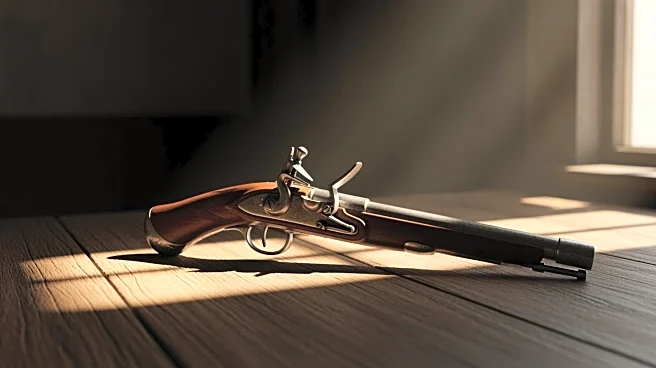
As Jackson walked by, Lawrence stepped forward and fired his first pistol at the president's back. Miraculously, the gun misfired. Undeterred, Lawrence pulled out a second pistol and fired again, but this weapon also misfired. It was later determined that the pistols were vulnerable to moisture, and the humid weather that day likely contributed to their failure.
Jackson's Reaction and Lawrence's Capture
Despite the shock of the attack, President Jackson reacted swiftly. Known for his fiery temper, Jackson charged at Lawrence with his cane, beating him in self-defense. The commotion quickly drew the attention of the crowd, which included notable figures such as U.S. Representative Davy Crockett. Together, they subdued Lawrence and wrestled him into submission.
Lawrence was taken into custody, marking the end of the first assassination attempt on a U.S. president. The incident highlighted both the vulnerability of public figures and the unpredictable nature of mental illness, as Lawrence's actions were driven by delusions and paranoia.
The Aftermath and Trial
Richard Lawrence was brought to trial on April 11, 1835, at the District of Columbia City Hall. The prosecuting attorney was Francis Scott Key, known for writing "The Star-Spangled Banner." During the trial, Lawrence exhibited erratic behavior, refusing to acknowledge the court's authority and claiming he was the rightful judge of the proceedings.
After only five minutes of deliberation, the jury found Lawrence not guilty by reason of insanity. He was committed to various institutions and hospitals, eventually spending the remainder of his life at the Government Hospital for the Insane in Washington, D.C., where he died in 1861.
The attempt on Jackson's life sparked speculation about possible conspiracies, with some believing Lawrence was influenced by Jackson's political enemies. However, no evidence was ever found to support these claims. The event remains a significant chapter in the history of presidential security and mental health awareness.