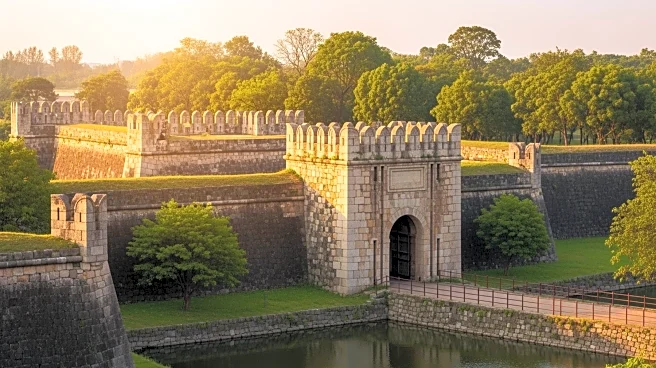




The Fortress of Luxembourg, once a formidable military stronghold, has evolved into a significant cultural and historical landmark. Its strategic importance and complex history have left a lasting impact on Luxembourg City, transforming it from a fortified military site into a UNESCO World Heritage Site. This transformation reflects the city's journey from a battleground to a center of cultural heritage and tourism.
Historical Significance
The Fortress of Luxembourg was constructed
over nine centuries, beginning shortly after the city's foundation in the tenth century. Its strategic location made it a key military site for controlling the border area between France and Germany. Over the years, the fortress was expanded and reinforced by various European powers, including the Burgundians, French, Austrian and Spanish Habsburgs, and Prussians. Each occupier left their mark, adding to the fortress's complexity and strength.
By the end of the Renaissance, Luxembourg was already one of Europe's strongest fortresses, earning the nickname "Gibraltar of the North." Its formidable defenses played a crucial role in numerous European conflicts, including the Habsburg-Valois wars and the French Revolutionary Wars. The fortress's strategic importance was underscored during the 1866 Luxembourg Crisis, which nearly led to war between France and Prussia.
Demilitarization and Transformation
The 1867 Treaty of London marked a turning point for the Fortress of Luxembourg. The treaty required the fortress to be dismantled and Luxembourg to be declared perpetually neutral, ending its military significance. Over the next 16 years, the fortress was systematically dismantled, with many of its structures repurposed or covered with earth.
Despite the dismantling, several elements of the fortress were preserved, including the Bock promontory, Vauban towers, and the casemates of the Bock and the Pétrusse. These remnants have become major tourist attractions, drawing visitors from around the world to explore the city's rich history and architectural heritage.
UNESCO World Heritage Site
In 1994, the remains of the Fortress of Luxembourg and the city's old quarter were designated as a UNESCO World Heritage Site. This recognition highlights the fortress's historical and cultural significance, as well as its role in shaping Luxembourg's identity. The designation has helped to preserve the fortress's remnants and promote them as a key part of the city's tourism industry.
Today, visitors can explore the fortress's remains through guided tours and walking paths, such as the Wenceslas and Vauban circular walks. These tours offer a glimpse into the city's past, showcasing the impressive engineering and strategic planning that went into the fortress's construction.
In conclusion, the Fortress of Luxembourg has undergone a remarkable transformation from a military stronghold to a UNESCO World Heritage Site. Its rich history and cultural significance continue to captivate visitors, making it an essential part of Luxembourg's heritage and identity.