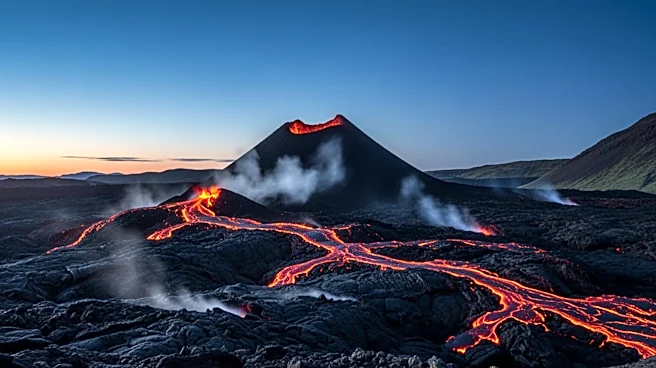

Hawaiʻi Volcanoes National Park, located on the island of Hawaii, is a testament to the dynamic geological processes that have shaped the Hawaiian Islands over millions of years. Established in 1916, the park
encompasses two of the world's most significant volcanoes: Mauna Loa, the largest volcano on Earth, and Kīlauea, one of the most active. This article delves into the park's formation, its geological features, and its evolution into a UNESCO World Heritage Site.
The Birth of a National Park
Hawaiʻi Volcanoes National Park was established on August 1, 1916, under the administration of the National Park Service. The park was created to preserve the unique volcanic landscapes and ecosystems of Mauna Loa and Kīlauea. These volcanoes are not only geological wonders but also provide scientists with valuable insights into the birth and development of the Hawaiian Islands. The park's establishment marked a significant step in the conservation of these natural phenomena, ensuring that future generations could witness the ongoing volcanic activity and its impact on the environment.
The park's creation was driven by the need to protect the unique geological features and the distinct ecosystems that have evolved in response to the volcanic activity. The park's designation as a UNESCO World Heritage Site in 1987 further underscored its global significance, highlighting its outstanding natural values and the importance of preserving its unique landscapes.
Geological Significance
The park's geological significance lies in its two main volcanoes, Mauna Loa and Kīlauea. Mauna Loa, the largest volcano on Earth, offers a glimpse into the processes that have shaped the Hawaiian Islands. Its massive size and frequent eruptions provide scientists with a natural laboratory to study volcanic activity and its effects on the environment. Kīlauea, on the other hand, is renowned for its almost continuous eruptions, making it one of the most active volcanoes in the world.
These volcanoes have played a crucial role in the formation of the Hawaiian Islands, with their eruptions creating new land and shaping the island's topography. The park's landscapes are a testament to millions of years of volcanic activity, showcasing a range of geological features from lava flows to volcanic craters.
Evolution of the Park
Since its establishment, Hawaiʻi Volcanoes National Park has evolved to accommodate the growing number of visitors drawn to its unique landscapes and active volcanoes. The park attracts approximately 2.6 million visitors annually, making it a major tourist destination. The park's management has focused on balancing visitor access with the preservation of its natural and cultural resources.
In addition to its geological features, the park is home to a diverse range of ecosystems and a distinct Ancient Hawaiian culture. The park's landscapes, shaped by volcanic activity, support a variety of plant and animal species, many of which are endemic to the Hawaiian Islands. The park's cultural significance is also evident in its designation as an International Biosphere Reserve in 1980, recognizing its unique ecosystems and the cultural heritage of the Hawaiian people.
Hawaiʻi Volcanoes National Park continues to be a vital site for scientific research, conservation, and education, offering visitors a unique opportunity to witness the power of nature and the ongoing processes that shape our planet.