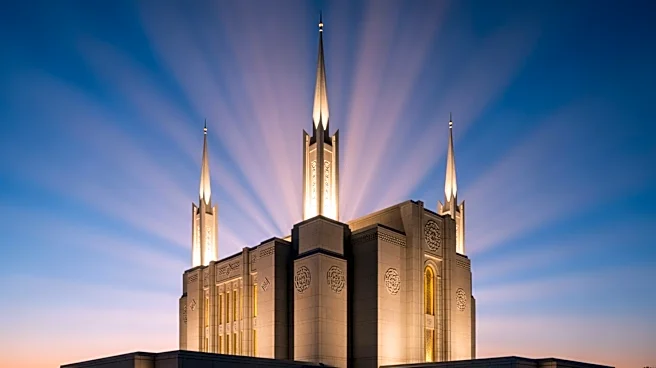






The Nauvoo Temple, constructed by the Church of Jesus Christ of Latter Day Saints, is renowned for its distinctive architectural style and symbolic elements. Designed in the Greek Revival style, the temple incorporated unique motifs that held significant meaning for the Latter Day Saints.
Greek Revival Design
The Nauvoo Temple was designed by architect William Weeks under the direction of Joseph Smith. The building was 128 feet long and 88 feet wide, with a clock tower
and weathervane reaching a height of 165 feet. This design marked a 60% increase in size compared to the Kirtland Temple.
The temple featured two assembly halls, one on the first floor and one on the second, called the lower and upper courts. Unlike the Kirtland Temple, the Nauvoo Temple had a full basement that housed a baptismal font. The design was intended to accommodate the growing needs of the church and its members.
Symbolic Motifs
The Nauvoo Temple is notable for its use of sunstones, moonstones, and starstones. These motifs are often mistakenly thought to represent the three degrees of glory in the Latter Day Saint conception of the afterlife. However, the stones appear in the wrong order for this interpretation.
Instead, the design was meant to symbolize the Church as the Bride, the Lamb's wife, referencing Revelation 12:1. The starstones at the top of the temple represent the "crown of twelve stars," the sunstones in the middle symbolize being "clothed with the sun," and the moonstones at the bottom signify the "moon under her feet."
Legacy of Design
The architectural and symbolic elements of the Nauvoo Temple have left a lasting legacy. Although the original temple was destroyed, the rebuilt Nauvoo Illinois Temple replicates the exterior design while incorporating modern interior layouts.
The temple's design reflects both the cultural heritage of the Nauvoo region and its spiritual significance to the church. The use of symbolic elements continues to provide deeper meaning to the temple's function and aesthetics, preserving the legacy of the original Nauvoo Temple for future generations.