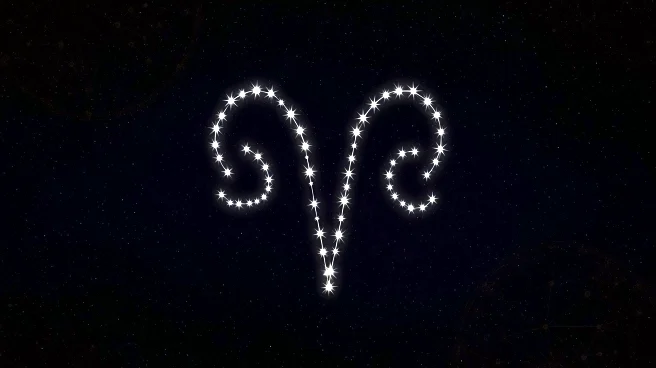




Aries, a constellation located in the northern celestial hemisphere, has been a significant part of human history and culture for centuries. Known as the ram, Aries is one of the 88 modern constellations and was one of the 48 constellations described by the 2nd-century astronomer Ptolemy. This article delves into the historical significance of Aries, tracing its origins and its role in various cultures throughout history.
Ancient Origins and Babylonian Influence
The constellation of Aries
has its roots in ancient Babylonian astronomy. In the Babylonian zodiac, Aries was known as MULLÚ.ŠUN.GÁ, which translates to "The Agrarian Worker" or "The Hired Man." This name reflects its role in the agricultural calendar, as described in the MUL.APIN, a comprehensive table of the rising and settings of stars. The MUL.APIN likely served as an agricultural calendar, marking the constellation as the final station along the ecliptic.
The transition from the Agrarian Worker to the Ram in Babylonian tradition is believed to have occurred due to its association with Dumuzi the Shepherd. By the time the MUL.APIN was created around 1000 BC, Aries was identified with both Dumuzi's ram and a hired laborer. This shift highlights the evolving cultural significance of the constellation in ancient Babylonian society.
Aries in Egyptian and Greek Mythology
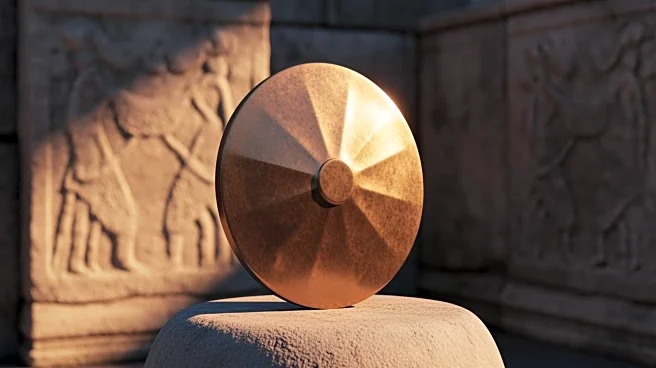
In ancient Egyptian astronomy, Aries was associated with the god Amun-Ra, depicted as a man with a ram's head. Amun-Ra represented fertility and creativity, and Aries was called the "Indicator of the Reborn Sun" due to its location at the vernal equinox. During this time, priests would process statues of Amun-Ra to temples, a practice later modified by Persian astronomers.
In Greek mythology, Aries is linked to the golden ram that rescued Phrixus and Helle on orders from Hermes. This mythological connection further solidified Aries' place in the cultural and astrological traditions of the time. The constellation was associated with the head and its humors, and it was strongly linked to Mars, both the planet and the god.
The Evolution of Aries in Astronomy
Aries has been recognized as an official constellation by the International Astronomical Union, defined as a specific region of the sky. Its historical significance is further emphasized by its role in marking the First Point of Aries, the location of the vernal equinox. Although the precession of the equinoxes has shifted this point into Pisces, Aries remains associated with the beginning of spring.
Throughout history, Aries has been depicted in various ways by different cultures. From the Babylonian Agrarian Worker to the Egyptian Amun-Ra and the Greek golden ram, Aries has played a significant role in shaping human understanding of the cosmos. Its enduring presence in astronomy and astrology highlights its importance across time and cultures.