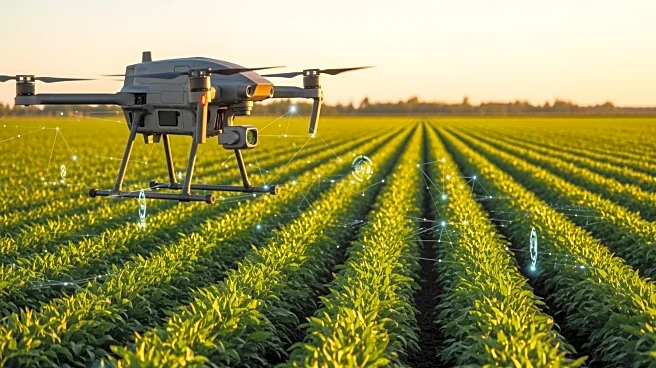




Precision agriculture is transforming the agricultural landscape by integrating cutting-edge technology into traditional farming practices. This approach relies on a suite of technological tools to gather, process, and analyze data, enabling farmers to make informed decisions that enhance productivity and sustainability. By examining the role of technology in precision agriculture, we can better understand its impact on modern farming.
Satellite Monitoring and GPS Technology
Satellite monitoring
and GPS technology are at the heart of precision agriculture, providing farmers with the ability to accurately map and monitor their fields. These tools offer real-time data on crop health, soil conditions, and terrain attributes, allowing for precise application of inputs like water and fertilizers. By leveraging satellite imagery, farmers can assess spatial variability within fields and tailor their practices to the specific needs of their crops.
GPS technology also plays a crucial role in farm fleet management, enabling the automation of agricultural operations. Vehicles equipped with GPS tracking units can transmit telemetry data to a central server for analysis, providing insights into location, speed, engine hours, and fuel consumption. This information helps farmers optimize their machinery use, reducing costs and environmental impact.
Real-Time Sensors and Drones
The integration of real-time sensors and drones further enhances the capabilities of precision agriculture. Sensor arrays mounted on GPS-equipped combine harvesters measure a range of variables, from chlorophyll levels to plant water status. This data, combined with satellite imagery, allows for the optimal distribution of resources through variable rate technology.
Drones offer a cost-effective solution for capturing high-resolution images of fields, providing additional geographical references such as elevation. Equipped with multispectral or RGB cameras, drones can create orthophotos and NDVI maps, which are used to analyze vegetative indexes. These insights enable farmers to correlate crop health with topography and optimize inputs accordingly.
The Future of Precision Agriculture
As technology continues to advance, precision agriculture is poised to play an increasingly important role in meeting global food demands. Emerging innovations, such as machine learning and artificial intelligence, offer the potential to further enhance decision-making and resource optimization. By automating complex processes, these technologies can reduce the need for manual labor and improve efficiency.
However, the widespread adoption of precision agriculture technologies faces challenges, including cost, accessibility, and the need for technical expertise. Addressing these barriers will be essential for realizing the full potential of precision agriculture and ensuring its benefits are accessible to farmers worldwide.
By embracing technological advancements, the agricultural industry can move towards a more efficient and sustainable future, meeting the needs of a growing global population while minimizing environmental impact.