






Astrology has been a significant part of human culture across various civilizations, providing a link between the cosmos and earthly events. From ancient times, societies like India, Greece, Egypt, Mesopotamia, Rome, and Persia have developed complex astrological systems. These systems, although now considered pseudoscientific, have played a crucial role in shaping cultural and scientific thought.
Ancient Roots of Astrology
Astrology's roots can be traced back to ancient civilizations
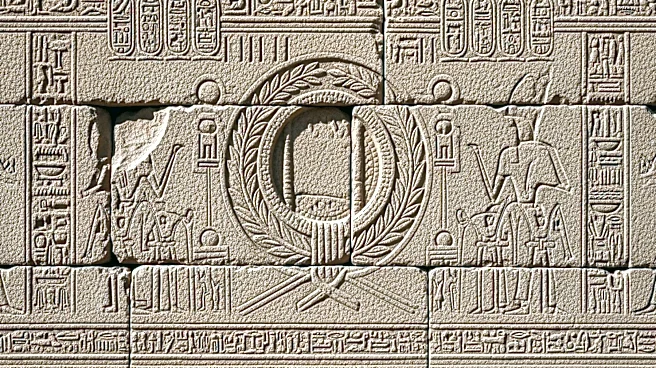
that sought to understand the universe and its influence on human life. In Mesopotamia, astrology was intertwined with religion and governance, where celestial events were seen as divine messages. Similarly, in ancient Egypt, astrology was used to predict the flooding of the Nile, which was crucial for agriculture.
The Greeks further developed astrology by integrating it with their philosophical and scientific inquiries. The Ptolemaic tradition, for instance, contributed significantly to the understanding of planetary movements. This tradition laid the groundwork for both astrology and astronomy, as the study of celestial bodies provided insights into the cosmos.
Diverse Astrological Systems
Astrology has evolved into various systems, each reflecting the cultural context of its origin. In India, Hindu astrology, also known as Vedic astrology, focuses on the lunar calendar and incorporates elements of Hindu philosophy. Chinese astrology, on the other hand, is based on the lunar year and includes the twelve animal signs, each representing different personality traits.
Islamic astrology, influenced by Greek and Persian traditions, played a significant role during the Islamic Golden Age. It was used to guide decisions in medicine, agriculture, and politics. Jewish astrology, while less prominent, also developed unique interpretations, often aligning with religious beliefs and practices.
Modern Interpretations and Applications
In contemporary times, astrology has diversified into various branches and applications. Sidereal and tropical astrology offer different methods of mapping the zodiac, with the former aligning with the stars and the latter with the seasons. Psychological astrology explores the connection between celestial movements and the human psyche, offering insights into personality and behavior.
Astrology's influence extends beyond personal horoscopes. It has impacted fields such as psychology, where it is used to explore personality traits and relationships. Despite its classification as a pseudoscience, astrology continues to captivate people worldwide, offering a unique lens through which to view the universe and our place within it.