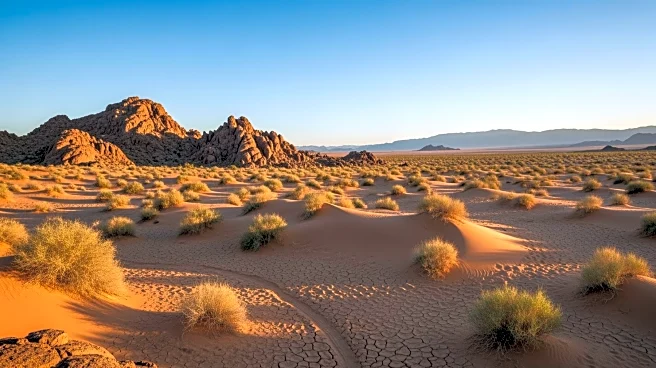




The Mojave Desert, located in the southwestern United States, is a unique and fascinating region known for its distinct geographical features and climate. Spanning southeastern California and southwestern Nevada, with portions extending into Arizona and Utah, the Mojave Desert is a part of the larger North American desert system. This article delves into the geographical boundaries and climate characteristics that define this remarkable desert.
Geographical Boundaries
The
Mojave Desert is bordered by several prominent mountain ranges and other deserts, creating a distinct geographical identity. To the west, it is flanked by the Sierra Nevada mountain range and the California montane chaparral and woodlands. The southern and eastern boundaries are marked by the Sonoran Desert. The eastern boundaries are less distinct due to the absence of an indicator species like the Joshua tree, which is endemic to the Mojave Desert.
The desert's topography is characterized by a series of parallel mountain ranges and valleys, a typical feature of basin and range topography. Notably, the Mojave Desert is home to Death Valley, the lowest elevation in North America. The desert is often referred to as the "high desert" because most of it lies between 2,000 and 4,000 feet above sea level. This elevation contributes to its unique climate and ecological characteristics.
Climate Characteristics
The climate of the Mojave Desert is marked by extremes in temperature and low precipitation. During the winter months, freezing temperatures and strong winds are common, along with occasional rain and snow in the mountainous regions. In contrast, summer temperatures frequently exceed 100°F, creating a harsh environment for both flora and fauna.
The desert receives an annual average precipitation of 2 to 6 inches, with higher altitudes receiving slightly more. Most of the precipitation comes from Pacific cyclonic storms between November and April, which primarily affect the mountainous areas. The late summer months can bring strong thunderstorms, leading to heavy showers and potential flash flooding.
Unique Features and Challenges
The Mojave Desert's climate and geography create unique challenges and features. The desert has historically not supported a fire regime due to low fuel loads. However, invasive plant species have altered this, facilitating fires in recent decades. The desert's climate also supports a diverse range of flora and fauna, adapted to survive in its harsh conditions.
The Mojave Desert's geographical and climatic features make it a region of great interest and importance. Its unique landscape and climate conditions continue to shape the ecological and human activities within its boundaries, offering a glimpse into the resilience of life in one of the harshest environments on Earth.