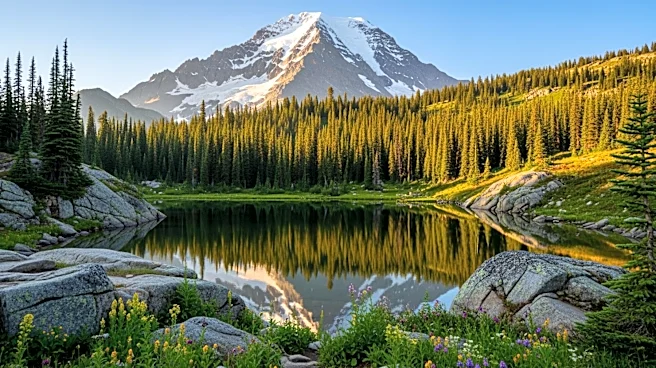




Mount Rainier National Park is not only a natural wonder but also a site of cultural and historical significance. Established in 1899, the park has played a vital role in preserving the cultural heritage of the region. This article delves into the cultural impact of the park, highlighting its historical connections and the influence it has had on local communities.
Native American Heritage
The area surrounding Mount Rainier has been inhabited by Native American tribes for
thousands of years. The mountain itself is known by various names in indigenous languages, including "Tacoma" in Lushootseed, meaning "snow-covered mountain." The park's cultural significance is rooted in its history as a site for hunting, gathering, and spiritual quests.
In 1963, the National Park Service contracted Washington State University to study Native American use of the Mount Rainier area. The study revealed that prehistoric humans used the area heavily between 8000 and 4500 years ago. The park was divided among five tribes along watershed boundaries, including the Nisqually, Puyallup, and Yakama.
Historical Landmarks and Architecture
Mount Rainier National Park is home to several historical landmarks that reflect its cultural heritage. The park was designated a National Historic Landmark in 1997, showcasing the National Park Service rustic-style architecture of the 1920s and 1930s. The Paradise Inn, built in 1916, is a masterpiece of early NPS master planning.
The park's architecture and design have been preserved to maintain its historical significance. The Paradise Guide House and Henry M. Jackson Visitor Center are examples of the park's commitment to preserving its cultural heritage.
Influence on Local Communities
The establishment of Mount Rainier National Park has had a profound impact on local communities. The park attracts over 1.6 million visitors annually, contributing to the local economy and fostering a sense of pride among residents.
Commercial leaders in Tacoma and Seattle supported the park's creation, recognizing its potential to boost tourism and provide opportunities for scientific study. The park's influence extends beyond its boundaries, serving as a symbol of natural beauty and cultural heritage for the region.
Mount Rainier National Park is a cultural treasure, preserving the history and heritage of the region while providing opportunities for public enjoyment. Its significance extends beyond its natural beauty, offering a glimpse into the cultural and historical roots of the Pacific Northwest.