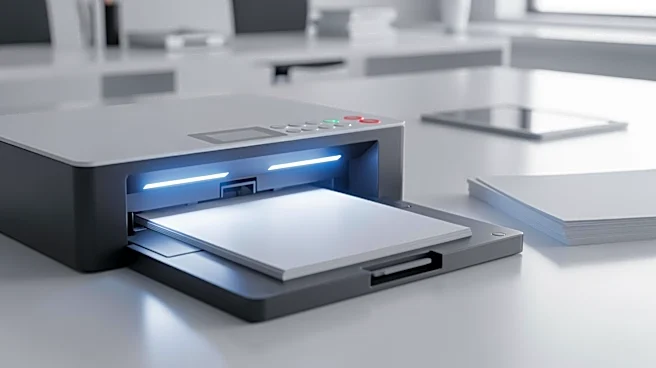









Automatic document feeders (ADFs) have become an integral part of modern office equipment, significantly enhancing the efficiency and functionality of devices such as printers, scanners, and copiers. These feeders allow for the automatic processing of multiple-page documents, saving time and reducing the need for manual intervention. This article explores the role of ADFs in office settings, highlighting their benefits and the technology behind them.
Enhancing Efficiency in Document Processing
In the fast-paced environment of modern offices, efficiency is key. Automatic document feeders contribute to this efficiency by allowing users to process multiple pages without the need to manually replace each page. This feature is particularly beneficial in multifunction or all-in-one printers, fax machines, photocopiers, and scanners. By automating the feeding of documents, ADFs enable the seamless scanning, copying, printing, or faxing of multi-page documents, which is a significant time-saver for office workers.
Most copiers and fax machines are equipped with ADFs, making them ubiquitous in office settings. The ability to send multi-page faxes unattended is a common use case, with some users even utilizing fax machines as scanners by faxing documents to themselves. This versatility underscores the importance of ADFs in streamlining office workflows and enhancing productivity.
Types of Automatic Document Feeders
There are two primary types of automatic document feeders that support duplex scanning: the reversing automatic document feeder (RADF) and the duplexing automatic document feeder (DADF). The RADF scans one side of a page, flips it, and then scans the other side. In contrast, the DADF scans both sides of a page in a single pass, offering a faster solution for two-sided originals.
The choice between RADF and DADF often depends on the specific needs of the office. While RADFs are effective for smaller volumes of two-sided documents, DADFs are preferred for high-speed, high-volume environments due to their ability to process documents more quickly. Both types of feeders are rated in images per minute (IPM), which indicates the number of sides they can scan each minute, with speed potentially varying based on the resolution used.
Impact on Office Productivity
The integration of automatic document feeders into office equipment has a profound impact on productivity. By reducing the need for manual document handling, ADFs allow employees to focus on more critical tasks, thereby improving overall efficiency. The ability to handle large volumes of documents quickly and accurately is particularly valuable in industries where document processing is a core function.
Moreover, the use of ADFs can lead to cost savings by minimizing the time spent on document management and reducing the likelihood of errors associated with manual handling. As technology continues to advance, the capabilities of automatic document feeders are likely to expand, further enhancing their role in modern office environments.