



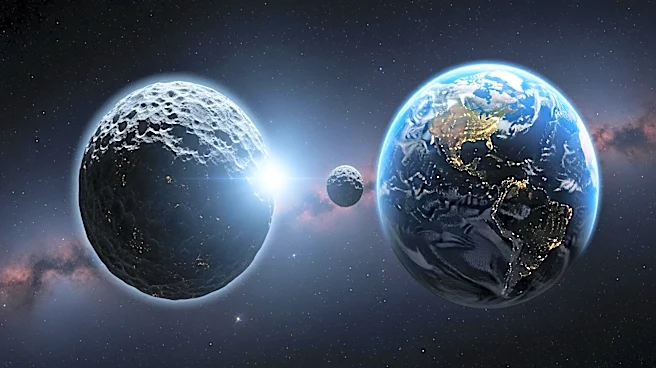
The Moon, Earth's natural satellite, has a rich geological history marked by impact craters and volcanic activity. Its surface features provide valuable insights into the processes that have shaped its landscape over billions of years. Understanding the Moon's geological and volcanic history is crucial for unraveling the mysteries of its formation and evolution.
Impact Craters and Surface Features
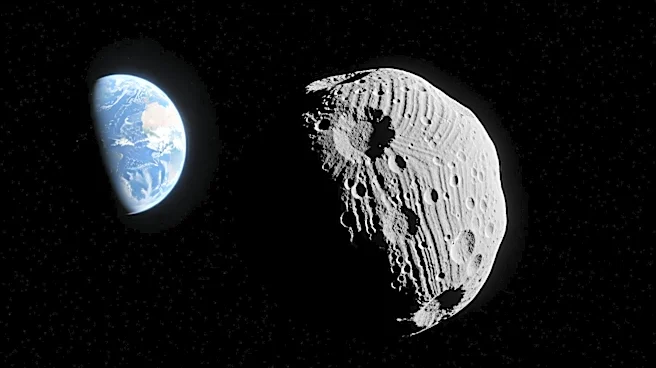
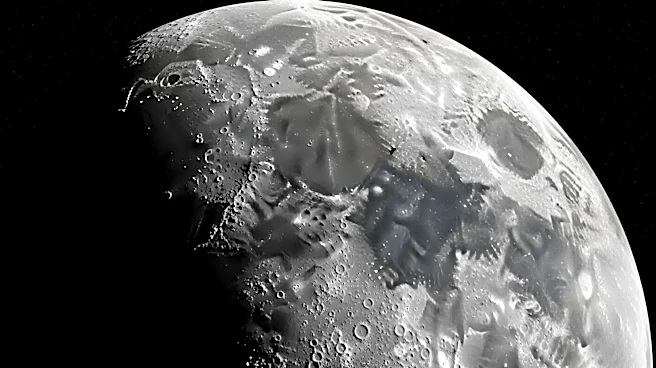
The Moon's surface is characterized by numerous impact craters, formed by collisions with
asteroids and comets. These craters vary in size and age, with some featuring bright ray-like streaks. The lack of an atmosphere on the Moon means that these craters are well-preserved, offering a glimpse into the Moon's past.
The lunar surface is covered in regolith dust, composed of fine material ejected from the lunar crust by impact events. This layer of dust gives the Moon its gray appearance and contributes to its low reflectance, or albedo. The regolith varies in thickness, with older surfaces having thicker layers than younger ones.
Volcanic Activity on the Moon
The Moon was volcanically active until about 1.2 billion years ago. During this time, lava flooded the lunar lowlands, forming the dark plains of basalt known as maria. These maria are predominantly found on the Moon's near side, where the crust is thinner.
The distribution of maria is uneven, with the basalts primarily appearing on the near-side hemisphere. The reasons for this distribution are not fully understood, but the relative thinness of the crust on the near side is believed to be a factor. Large impacts on the near side may have facilitated the flow of lava onto the surface.
The Moon's Geological Timescale
The Moon's geological history is divided into distinct periods, marked by impact events and volcanic activity. The Imbrian period, which occurred between 3.3 and 3.7 billion years ago, saw the majority of mare basalts erupting onto the surface. Some basalts are as young as 1.2 billion years, while others date back to 4.2 billion years.
The Moon's geological timescale provides a framework for understanding its evolution and the processes that have shaped its surface. By studying the Moon's geology, scientists can gain insights into the history of the solar system and the formation of other celestial bodies.