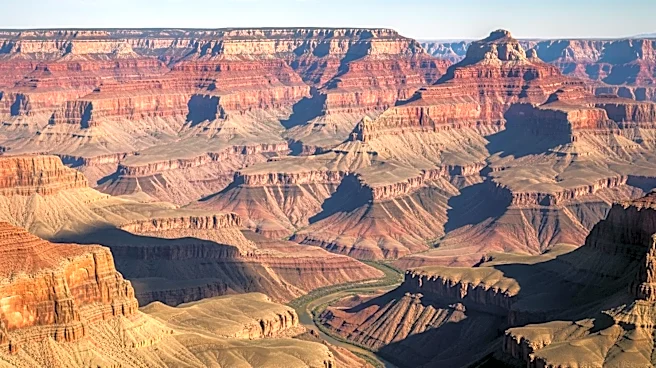








Grand Canyon National Park is renowned for its stunning landscapes and diverse geographic features. Located in northwestern Arizona, the park covers over 1.2 million acres and is home to the iconic Grand Canyon, a natural wonder that draws millions of visitors each year.
The Grand Canyon and Its Formation
The Grand Canyon is the central feature of the park, stretching 277 miles long, up to 18 miles wide, and reaching depths of over a mile. This immense gorge was carved by the Colorado
River, which continues to flow through the canyon, shaping its landscape over millions of years. The canyon's formation is attributed to the uplift of the Colorado Plateau, which increased the river's gradient and erosion rate.
The canyon's walls expose a thick sequence of ancient rocks, providing a glimpse into nearly two billion years of Earth's geological history. These rock layers, ranging from the Vishnu Schist at the bottom to the Kaibab Limestone at the rim, record the early geologic history of the North American continent. The canyon's depth and the height of its strata are a result of significant uplift during the Laramide orogeny.
The North and South Rims
Grand Canyon National Park is divided into two main public areas: the South Rim and the North Rim. The South Rim is more accessible and accounts for 90% of park visitation. It features Grand Canyon Village, which offers visitor services, lodging, and popular viewpoints. The North Rim, located on the Kaibab Plateau, is higher in elevation and offers a more remote experience.
The North Rim is closed during the winter months due to snow, while the South Rim remains open year-round. The elevation difference between the rims results in varying climates and ecosystems, with the North Rim receiving more precipitation and supporting different plant and animal species.
Tributary Canyons and Remote Areas
Beyond the main rims, the park encompasses a network of tributary canyons and remote areas. These regions are characterized by rugged terrain and are accessible via pack trails and backcountry roads. The park's geography includes diverse ecosystems, from desert scrub to coniferous forests, each supporting unique flora and fauna.
The park's headquarters are located at Grand Canyon Village, near the South Entrance, providing easy access to the canyon's most popular viewpoints. Visitors can explore the park's geography through hiking trails, scenic drives, and guided tours, each offering a different perspective on the canyon's vast and varied landscapes.
Grand Canyon National Park's geography is a testament to the power of natural forces and the beauty of Earth's geological history. Its diverse regions and features continue to captivate visitors, offering endless opportunities for exploration and discovery.